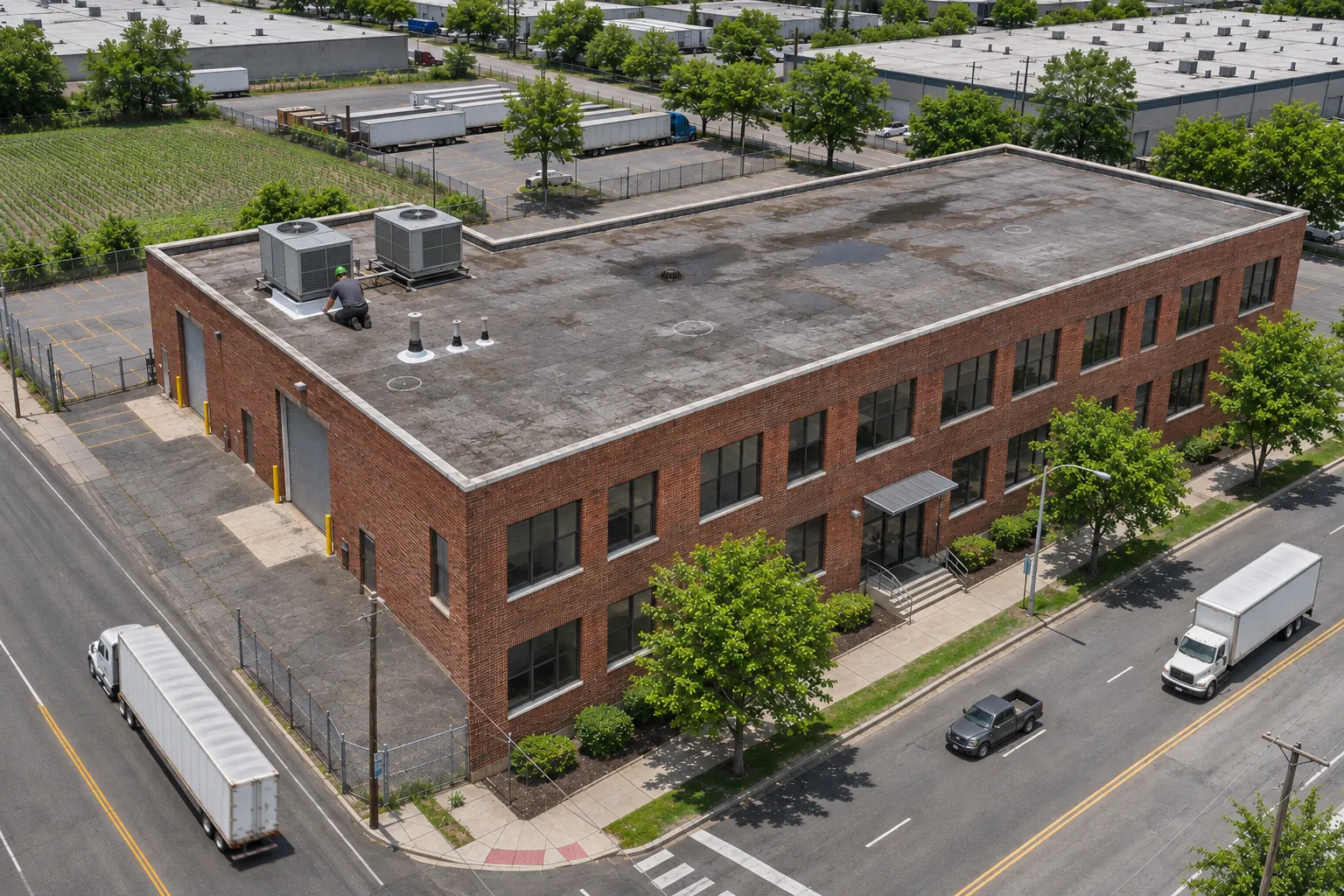
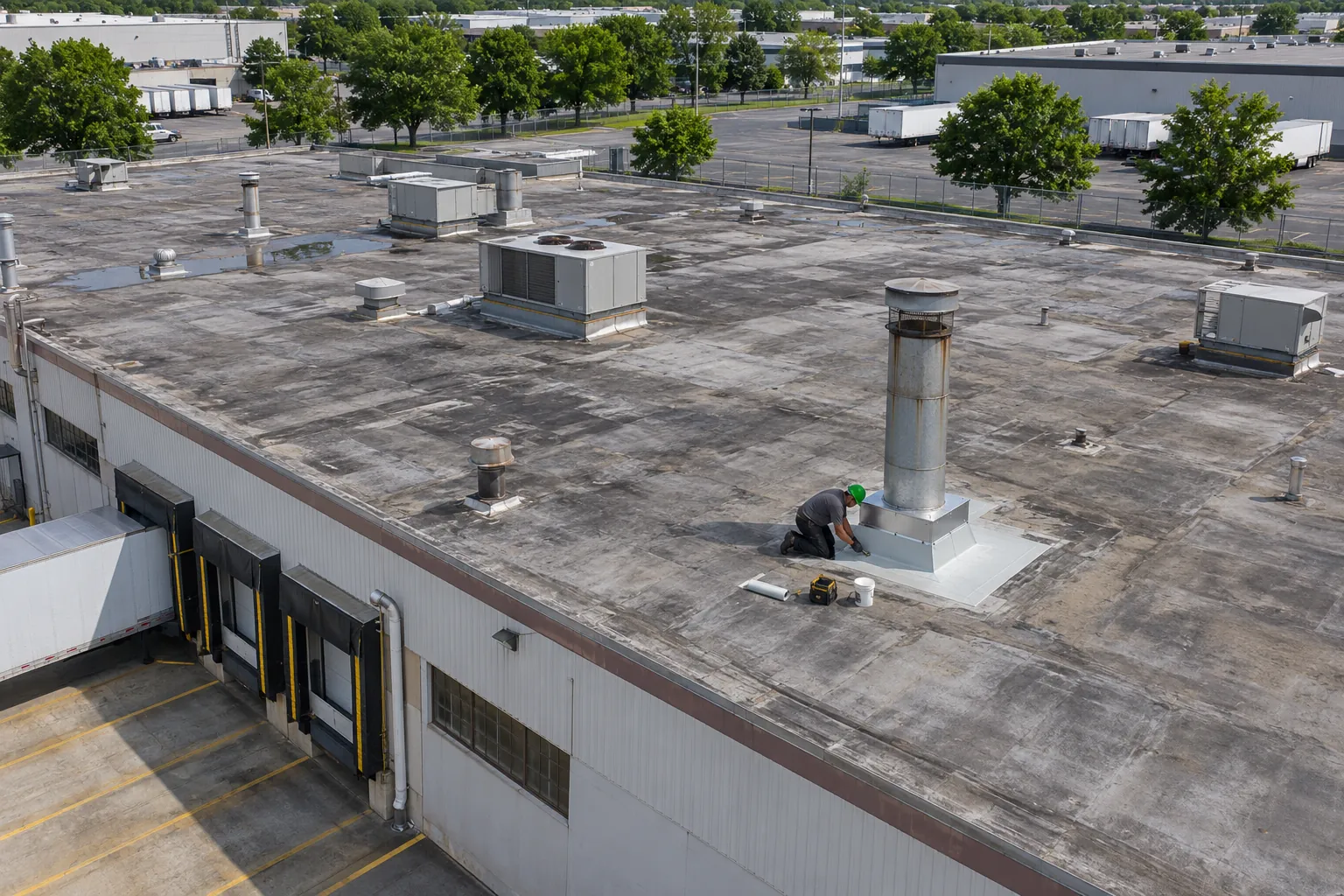
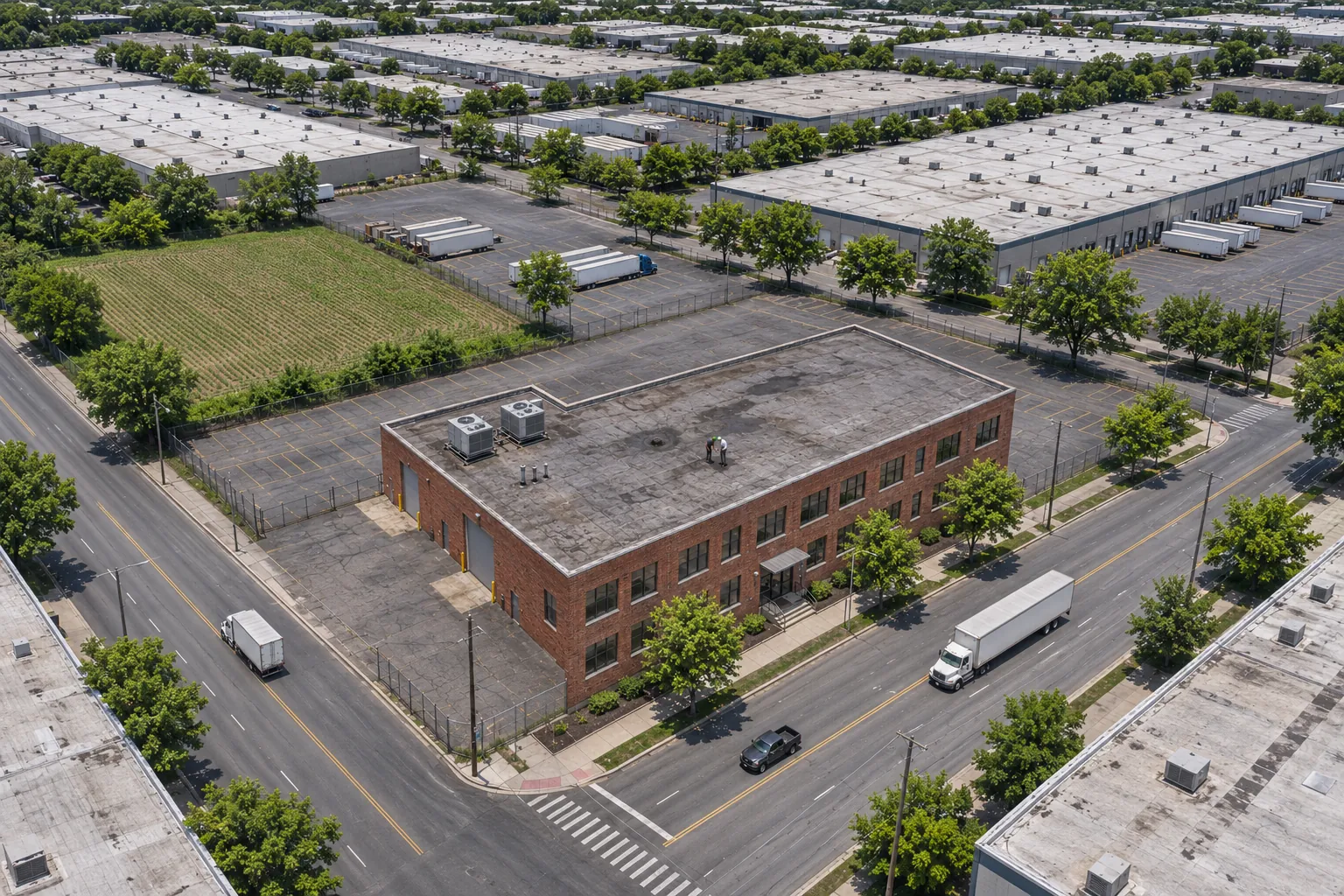
What if my roof needs more than one kind of repair?
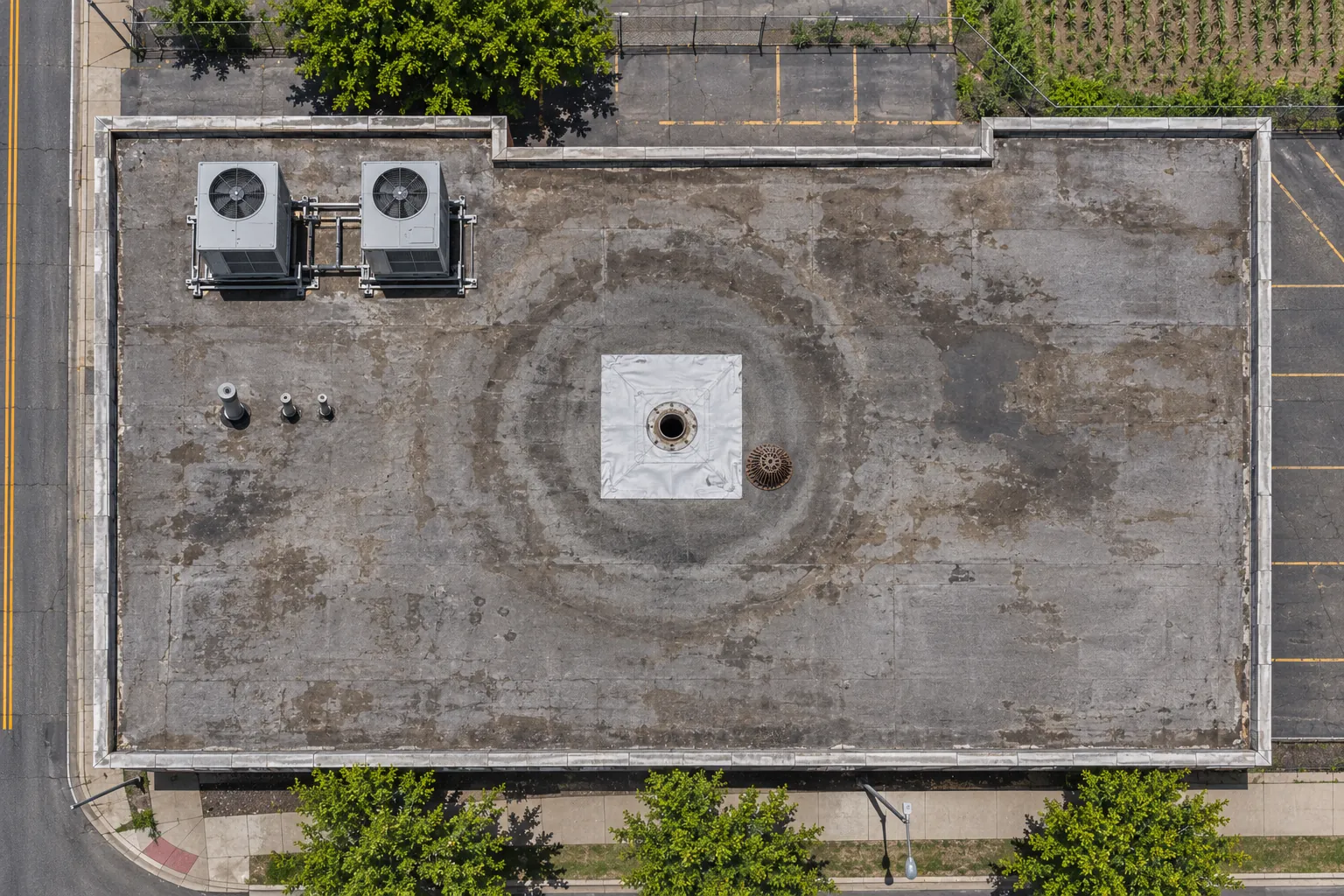
That happens often. A flat roof with a leaking drain might also have a cracked fan curb. We list each repair separately in the written scope, so you can see what each one fixes and decide on the order.
Can you replace one section instead of the whole roof?
When wet insulation or worn membrane stays inside a defined area and solid roofing surrounds it, that section gets cut out and replaced on its own. The edges have to tie into dry, healthy roofing for the repair to hold.
Do you work with our HVAC or equipment contractor?
Yes, when a rooftop unit, condensate line, or exhaust fan is part of the leak. We sort roof water from equipment water first, then coordinate so both sides of the problem get fixed.
Should we keep records between repairs?
Dated notes of where water appeared and what the weather was doing help a lot. Photos of earlier repairs, kept with those notes, let us tell a new defect apart from an older repair that needs more work.
How do we know whether our roof counts as flat or metal?
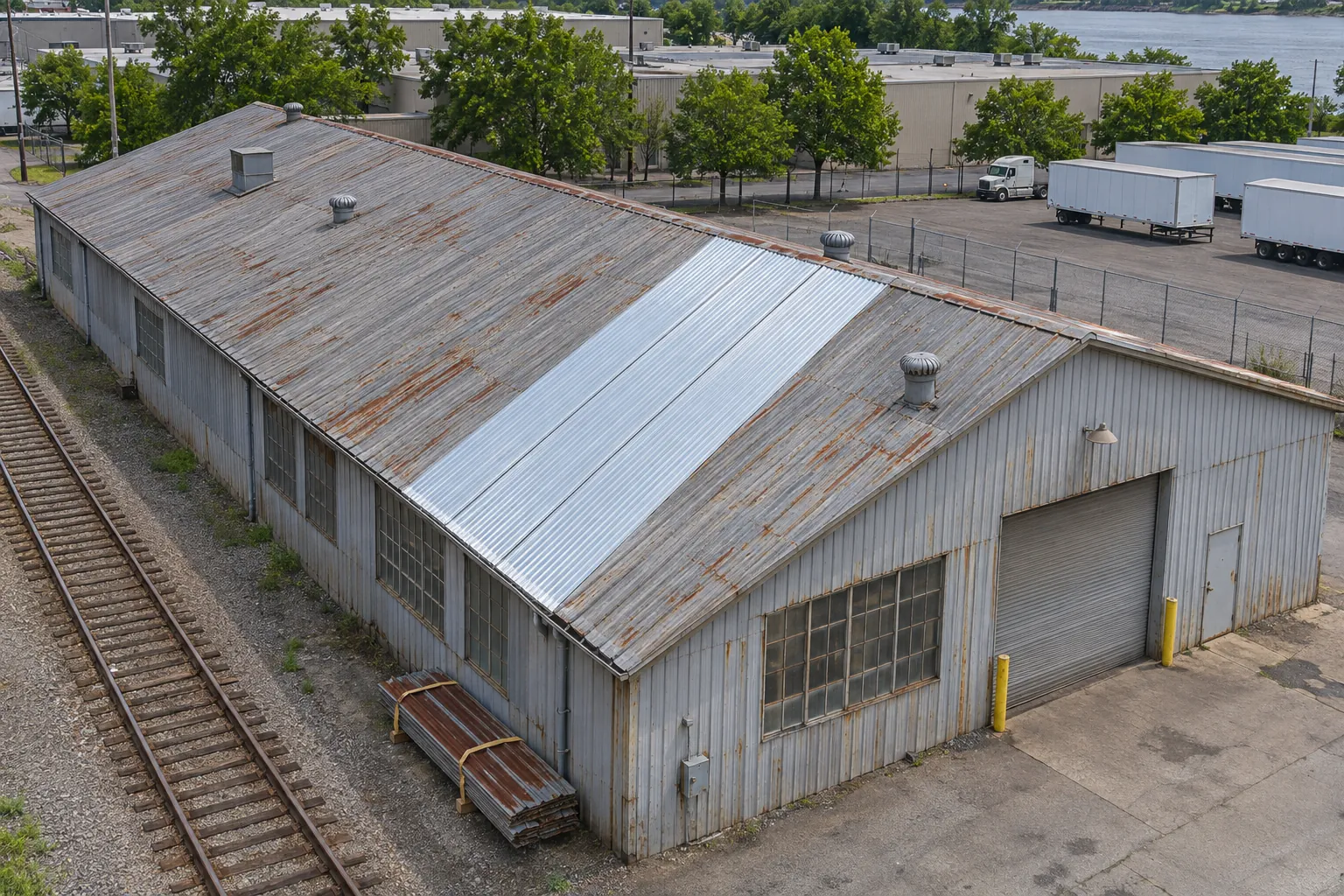
Look at it from a ladder or a photo. Smooth sheets of rubber-like or white membrane, or a gravel surface, mean a flat roof. Ribbed steel panels with rows of screws mean a metal roof. Many plant buildings have both, joined at a wall or curb.
What happens during the first inspection visit?
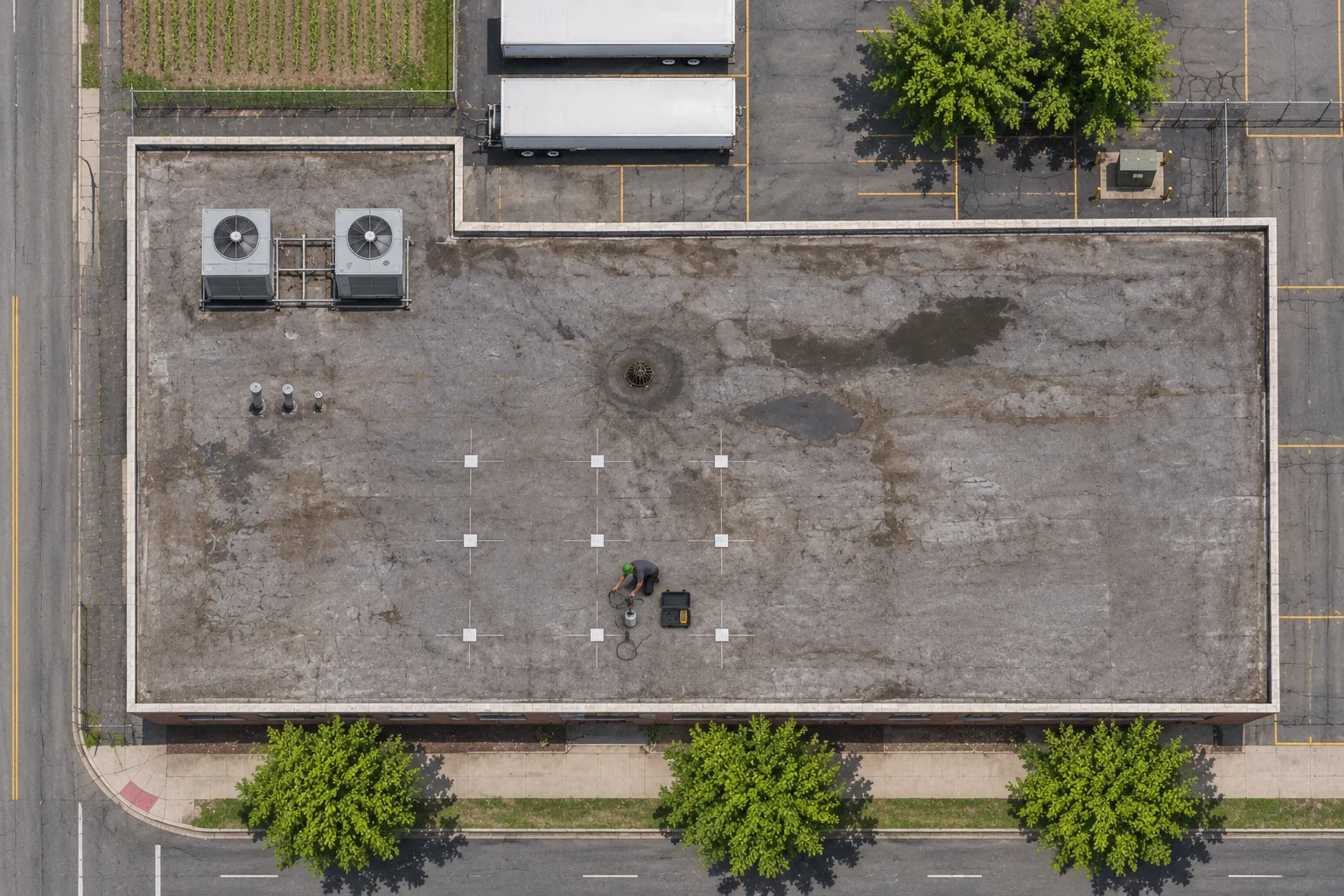
We mark stains inside, walk the roof above them, probe seams and flashing, check drains, and take cores where insulation might be wet. You leave the visit with a clear idea of what is wrong, and the written scope and price follow.
What roof access do you need?
A roof hatch, an interior ladder, or room outside for our ladder works. Locked hatches, alarms, or tenant spaces on the way up should be sorted out before the visit so the inspection is not cut short.
Will we get photos of the problems you find?
Every inspection includes photos of the defects, marked on a roof sketch, and the finished repair gets photographed too. Those images go into your roof file and make later leaks much easier to compare.
Can repairs go ahead in winter or wet weather?
Many repairs go ahead year-round. Some adhesives and sealants need dry surfaces and milder temperatures, so an active leak in cold or wet weather can get a temporary seal first, with the permanent repair once conditions allow.
Should tenants be told before roof work starts?
It helps. Tenants under the work area need to know about noise, any space that must be cleared, and when the roof will be open above them. We give you the schedule in writing so the notice is easy to pass along.