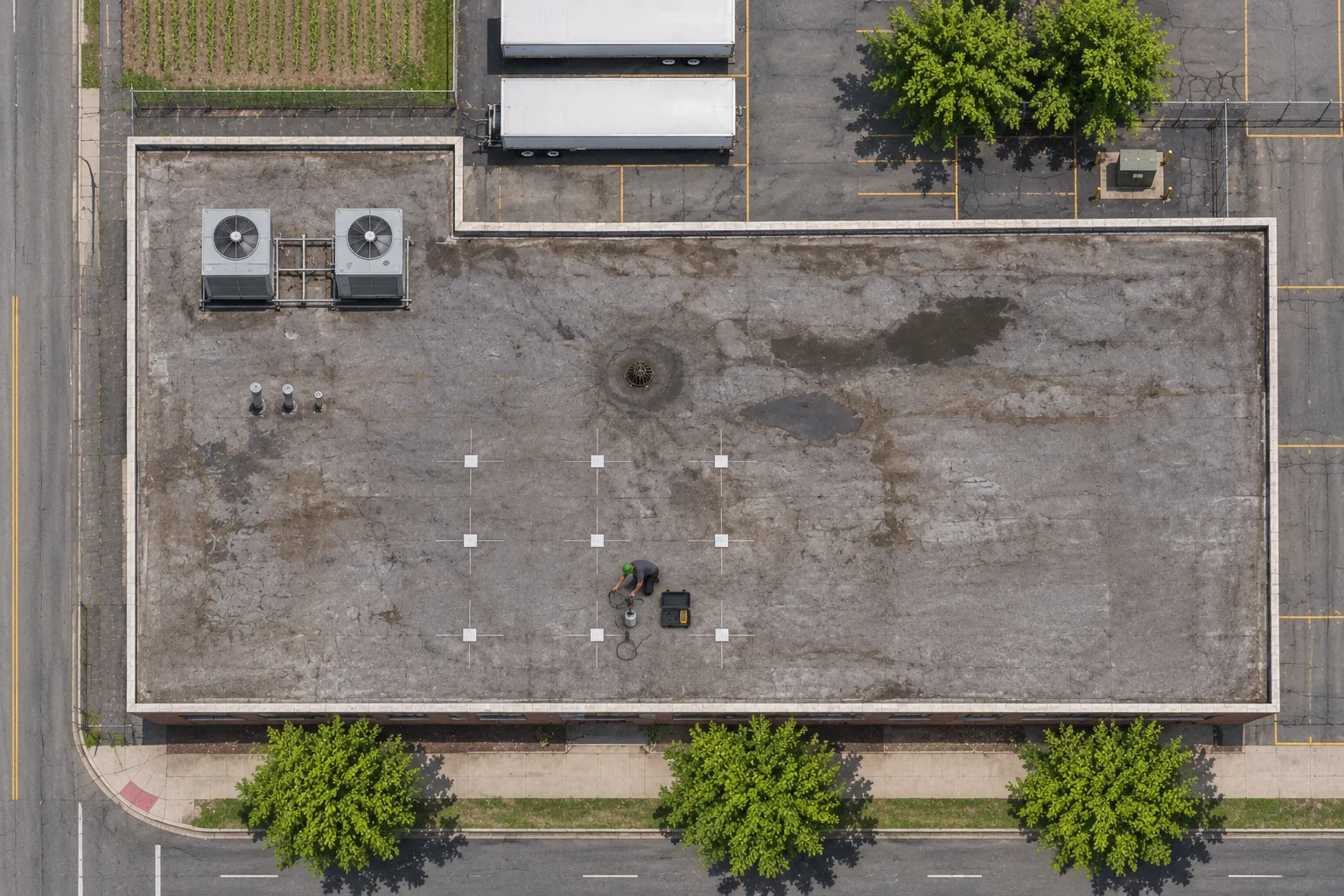
Top-down view of a marked core-cut grid on a flat roof with a roofer taking a core sample
QuestionsThirty answers in seven topics
Questions · Philadelphia, PA

Philadelphia Commercial Roof Repair FAQ

Plain Answers on Leaks, Drains, Panels, and Repair Decisions

This Philadelphia commercial roof repair FAQ answers what building owners ask about cost, flat and metal roofs, leak tracing, weather, permits, and nearby towns.

TopicsCost, roofs, leaks, weather, towns
All Questions

Philadelphia Commercial Roof Repair FAQ by Topic

Jump to a topic below. Every answer in the Philadelphia commercial roof repair FAQ starts with a direct reply, then gives the detail behind it.

Questions

Decisions on Price, Replacement, and Leases

Price, repeat leaks, food storage, and who pays come up before most repairs start.

What sets the cost of repairing a Philadelphia commercial roof?

An on-roof inspection sets the repair price for the building. We account for leak tracing, the roof system, damaged area sizes and locations, wet insulation identified through core cuts, flashing, drain work and access. Those findings also determine whether a local repair or replacement of the affected section is the right choice.

Who should investigate a leak above warehouse food storage?

A roof investigation above food storage needs coordination with the facility manager so contents can be protected while the entry path is traced. We compare interior stains with seams, drains and equipment openings. Water can travel along the deck, so the dripping point alone does not identify the roofing defect.

Should repeated leaks lead to replacing our industrial roof?

Repeated industrial roof leaks justify looking beyond the latest patch, but full replacement is only one possible outcome. We examine how failures are distributed and whether insulation or decking remains wet. Isolated defects in otherwise solid roofing can be repairable; widespread deterioration can make repeated spot work a poor fit.

Does a commercial lease decide who pays for roof repairs?

Roof repair responsibility depends on the commercial lease, including maintenance duties and notice requirements. We can describe the damage and proposed roofing work, but the owner and tenant should check their agreement before assigning payment. Roof access, authorization and protection of occupied areas also need coordination while that responsibility is clarified.

Questions

Low-Slope Roofs, Ponding, and Drain Bowls

Heavy rain, standing water, and drain connections decide how a low-slope roof holds up.

Why does our flat roof leak only during heavy downpours?

Heavy downpours can expose restricted drainage or failed roof details that receive less water during lighter rain. We inspect outlets, low spots and flashing before selecting a patch location. A ceiling stain beside a wall can originate higher up at the coping rather than directly above the wet area.

Can patching remove standing water from a flat roof?

A surface patch leaves the reason water remains on a flat roof in place. We check drain height, debris, insulation slope and possible deck movement, then examine the wet area for damage. The repair can need drainage changes alongside replacement of affected roofing instead of another layer over the puddle.

When is replacing a flat roof section better than patching?

Section replacement becomes a consideration when wet insulation or deteriorated membrane extends beyond a small opening. We need solid material at the repair boundary to make dependable connections. A small visible split can conceal a larger affected area, while an isolated puncture in dry, serviceable roofing can accept a compatible patch.

Where can water escape around a commercial roof drain?

Water can escape at the membrane connection, drain bowl or piping below the roof. We examine those components separately rather than treating every drain leak as a flashing problem. If the fault extends into pipework, roofing and plumbing tasks need coordination before the connection is opened above occupied space.

Questions

Metal Panels, Screw Holes, and Moving Seams

Fasteners, laps, rusted panels, and seams that move with the building cause most metal roof leaks.

Which metal roof connections commonly need checking for leaks?

Exposed fasteners, panel laps and penetration flashings deserve early checks on a leaking metal roof. We look for failed washers, poor screw grip, opened joints and corrosion hidden under old sealant. The actual cause still needs tracing; several defective connections can contribute to the same interior wet area.

How are enlarged screw holes repaired on metal roofing?

An enlarged screw hole needs a repair that restores secure attachment and weather sealing. We examine the surrounding metal and the support below before choosing a compatible fixing or repair detail. Adding sealant over a screw that no longer holds does not resolve movement at that connection.

Must every rusted panel on a factory roof be replaced?

Not every rusted panel needs replacement, but perforation or substantial metal loss can rule out a local repair. We inspect edges, laps and attachment points to see how far deterioration extends. Replacement planning must also address adjoining panels and supports, especially where an old patch has concealed continued corrosion.

Can a moving metal seam be sealed permanently rigid?

A metal seam repair should accommodate the movement intended by the panel system. We check engagement, fasteners and the condition of old sealing materials before choosing the repair. A rigid patch across a moving connection can shift the stress elsewhere or reopen, leaving the underlying joint problem unresolved.

Questions

Tracing Storm Leaks to Their Source

Water rarely drops straight below the opening, so tracing it takes method and patience.

Is storm-only dripping acceptable in a Philadelphia commercial building?

Storm-only dripping still indicates water entering the building and deserves investigation. We compare rain direction and intensity with roof drains, parapet details and nearby openings. A roof that stays dry between storms can have a defect that is reached only when runoff rises or wind drives water against a weak connection.

How can water reach warehouse aisles far from the roof opening?

Water can travel along decking or within roof layers before dropping into a warehouse aisle. We map the interior evidence against seams, curbs and drainage above, then narrow the investigation through targeted testing or selective openings. Repairing directly over the drip without tracing that route can leave the entry point untouched.

Could a rooftop unit cause leaking without damaged roofing?

A rooftop unit can contribute water through equipment faults or condensate drainage even when adjacent roofing is in good condition. We compare leakage with equipment operation and rainfall, then inspect curb flashing and service penetrations. Involving the equipment technician helps separate mechanical water sources from a roof connection that needs repair.

Why can tracing a warehouse leak change the repair price?

Leak tracing can reveal damage beyond the apparent opening, changing the repair scope. An on-roof inspection sets the price after we assess the roof system, damaged area sizes and number, core cuts for wet insulation, flashing, drains and access. We then compare localized repair with replacing a section where that is more appropriate.

Have a Question the List Misses?

Call and ask it directly. If it is about your own roof, we will tell you what an inspection would check.

Call Us
Questions

Production Floors, Exhaust Fans, and Upkeep

Plant roofs carry equipment, residue, and foot traffic that shape how repairs are planned.

How should leaks above an active production floor be handled?

Leaks over production need interior protection and a repair sequence matched to the operation below. We identify the entry path, the area that must be opened and any equipment needing isolation. Dust, debris and water exposure can require a temporary work boundary even when the roofing defect itself is localized.

What makes exhaust fan flashing difficult to repair?

Exhaust residue and vibration can complicate repairs around a fan curb. We inspect contaminated roofing, loose connections and the flashing shape before selecting materials. The fan can also need attention from its service technician so a roofing repair is not repeatedly stressed or contaminated by an unresolved equipment problem.

Do industrial roof repairs need follow-up maintenance?

Industrial roof repairs need follow-up checks because surrounding roofing, drainage and equipment use continue to affect them. We look for damaged patch edges, blocked outlets and new wear along service paths. Recording changes after storms or maintenance visits helps distinguish a new defect from a repair that needs further attention.

What should an industrial roof inspection document before repairs?

A repair inspection should document defect locations, possible moisture spread and connections that need closer investigation. We relate those findings to the production areas below and note access restrictions around equipment. Photographs and a roof sketch make the proposed repair boundaries clearer than a description based solely on the interior drip.

Questions

Snowmelt, Hail, Brick, Offices, and Permits

Winter melt, summer hail, damp masonry, occupied offices, and permit questions in the city.

Why might a repaired roof leak again after snow melts?

Snowmelt can follow a different path from ordinary rainfall, particularly when ice blocks drains or gutters. We inspect the renewed leak alongside nearby seams and wall transitions. Freeze-thaw movement can expose weak details, while heavy wet snow requires separate attention to structural concerns rather than assumptions based on the repair’s size.

Does hail damage qualify automatically for insurance payment?

Hail damage by itself settles nothing about insurance coverage; coverage depends on the policy and the cause of the loss. We document punctures, split seams and affected flashing to define roof repairs. Summer storm inspections should also distinguish recent damage from older deterioration that was already present.

Could damp brickwork be mistaken for a failed roof repair?

Water entering brickwork or condensation from indoor humidity can appear near a previously repaired roof area. We compare moisture patterns with weather, ventilation and the roof-to-wall connection. A fresh membrane patch will not resolve water descending behind flashing from a wall defect or moisture developing inside the assembly.

Can repairs above Philadelphia offices be divided into smaller work areas?

Roof repairs can sometimes be divided into areas that fit office operations, provided each opening can be protected and closed appropriately. We discuss noise, debris, roof access and rooms beneath the work. Some activities can require temporary isolation, so occupancy arrangements should follow the actual repair method rather than an assumption of uninterrupted use.

Where should a Philadelphia owner clarify permit requirements for roof repairs?

Philadelphia roof repair permit questions belong with the Department of Licenses and Inspections. Construction permit information. We would describe the damaged covering, proposed removal and any affected supports for review. A leak’s appearance does not establish how much work lies underneath, so the written scope should reflect the investigation before scheduling proceeds.

Questions

Questions From Our Five Nearby Towns

Norristown, Chester, Lansdale, Yeadon, and Lansdowne each bring their own roof questions.

Can a Norristown warehouse repair be limited to one leaking bay?

A Norristown warehouse repair can stay within one bay if the damaged area ends at solid, compatible roofing. We check whether moisture has crossed that boundary and whether drains or equipment interrupt the proposed connection. The visible leak area should not be treated as the repair limit without investigating the layers below.

Why would a Chester metal roof leak around newly serviced equipment?

Equipment servicing can disturb flashing or introduce new openings, although the timing alone does not prove the cause of a Chester roof leak. We inspect access paths, curb seals and nearby metal seams. The equipment itself also needs consideration if water appears while the unit operates rather than during rain.

Should recurring drain leaks in Lansdale receive another surface patch?

Recurring drain leaks in Lansdale need the entire connection investigated before another surface patch is selected. We examine the drain bowl, membrane attachment and plumbing below, along with wet insulation nearby. If the outlet is obstructed or the pipe connection leaks, added roofing material can leave the actual problem unchanged.

What records help diagnose repeated commercial leaks in Yeadon?

Leak dates, weather conditions and marked interior locations help narrow a recurring roof problem in Yeadon. We compare those records with previous repair photographs and rooftop equipment activity. A record of where water appeared matters more than a general note that the roof leaked, particularly when water travels through several layers.

Are damaged panel edges repairable on a Lansdowne commercial roof?

Damaged panel edges in Lansdowne can be repairable if enough solid metal remains for the required connection. We inspect adjoining laps and supporting material before selecting a detail. Where corrosion or tearing prevents secure attachment, replacing the affected panel can be necessary rather than relying on sealant along the edge.

Ask Us What the Philadelphia Commercial Roof Repair FAQ Missed

Your roof can raise a question these answers leave open. Call or send the address and a short description.

Call Us (267) 839-7120