Repair Fits When
- Leaks start at fan curbs, stacks, or pipe supports
- Residue damage stays near the exhaust outlets
- Wear follows the routes technicians walk
- Insulation away from equipment is dry
- Drains clog with dust but the bowls are intact

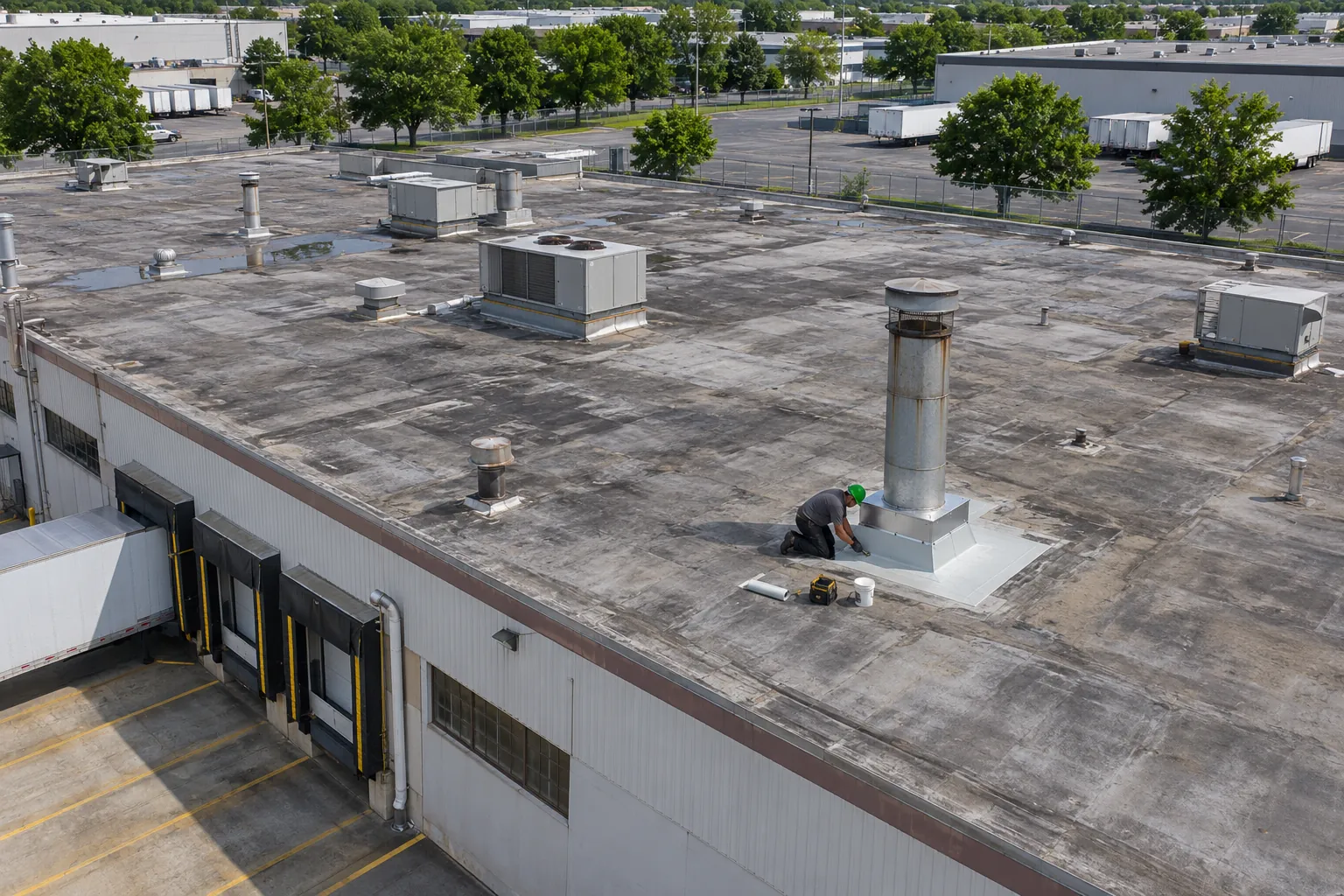
Our Philadelphia industrial roof repair work fixes flashing at fans and stacks, membrane damaged by residue, and worn service paths above working floors.
Philadelphia industrial roof repair fits plant roofs where damage stays around equipment and paths. The other list shows when it spreads further.
Plant roofs wear in patterns set by the equipment on them. These are the signs to watch.
Exhaust fans shake their curbs every time they run. Over months, the flashing splits at the corners and lets water down the curb wall.
Oil, grease, or process dust settling around exhaust outlets softens many membranes. Discolored, tacky areas near fans need checking.
Technicians crossing the same route scuff the membrane and leave small punctures, often near hatches and ladders.
Water over a working line puts equipment and product at risk. Protection inside comes first, then the trace on the roof.
Process dust and debris collect in strainers and slow drainage, leaving water to sit around curbs and stacks.
Each method matches the way plant roofs fail.
Contaminated roofing is cut back, the curb gets new flashing shaped to it, and the fan service tech checks the unit so vibration stops tearing it open.
Leaks above production get traced from the floor marks to the roof, with interior protection set up before any opening.
Pads along the routes technicians use take the foot traffic that would otherwise wear holes in the membrane.
Inspections document defect locations, possible moisture spread, and access limits around equipment, with photos and a roof sketch.
Follow-up visits check patch edges, outlets, and service paths after storms or equipment work, so small problems get caught early.
Repairs are planned around the operation below, so production keeps running.
Fans and units shake loose the flashing around their curbs.
Rebuilt curb flashing ties into the membrane, and equipment problems go to the right technician.
Grease and process dust break down roofing near exhaust outlets.
Damaged membrane is cut out and replaced, and outlets get attention so residue stops landing there.
Repeated foot traffic punctures the field membrane along common routes.
Walkway pads and patched punctures keep the routes from turning into leaks.
Dust, debris, and water from roof work can reach the floor below.
Work boundaries inside and staged openings above keep the line running during repairs.
Call and tell us what sits under the drip. We will talk through protecting the line and tracing the leak.
Call UsPlant repairs are sequenced around the work happening below.
Defect locations, possible moisture spread, and the production areas below get recorded, along with access limits around equipment.
Where needed, a temporary work boundary goes up below the repair to keep dust, debris, and water off the line.
Fans or units that need shutting down or servicing get scheduled with their technicians before the curb is opened.
Openings follow the production schedule, and each one is closed before work moves to the next section.
Patch edges, outlets, and service paths get rechecked after storms or maintenance visits, so a new defect stands apart from older work.
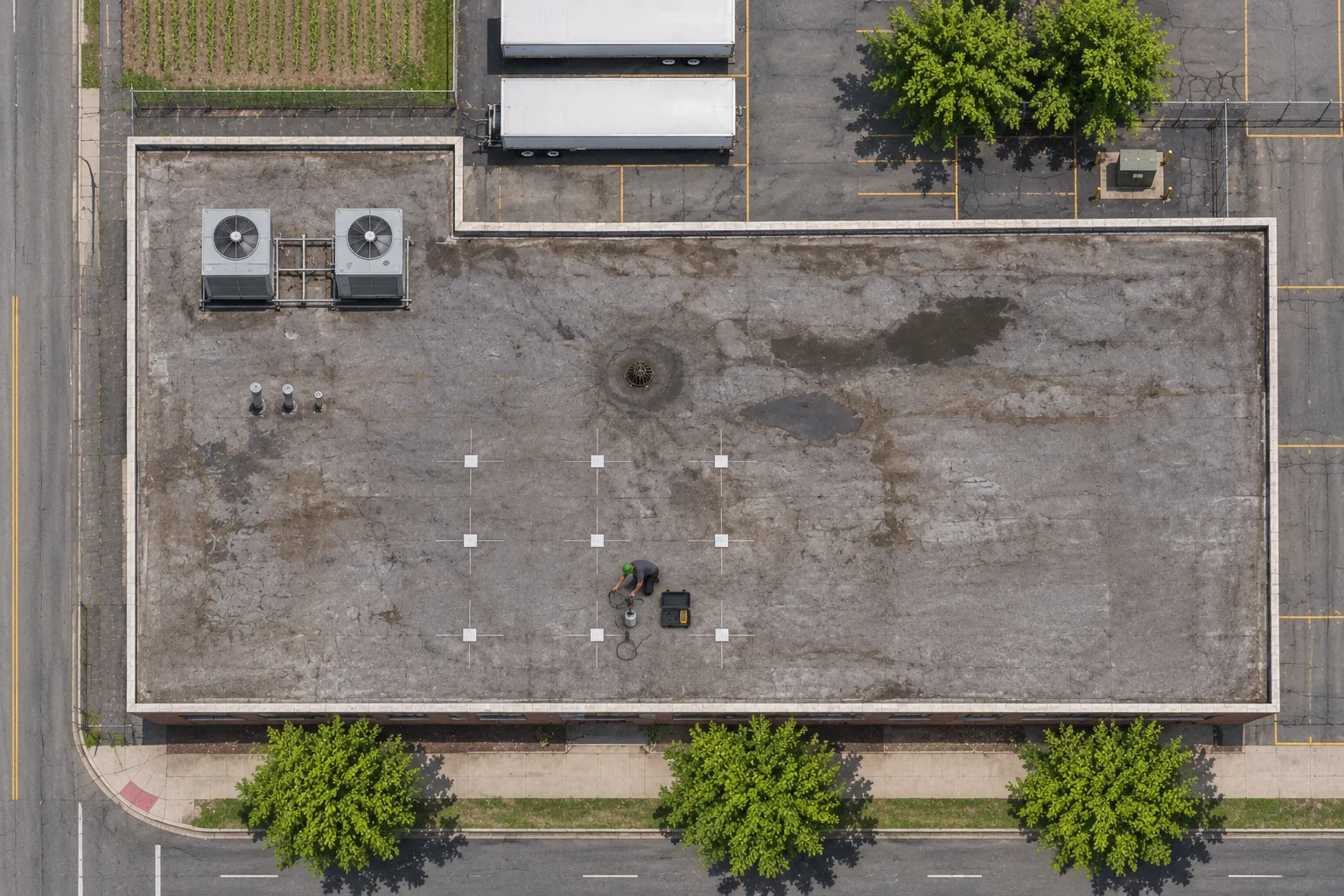
Plant buildings often combine flat sections, metal additions, and hard-to-trace leaks.
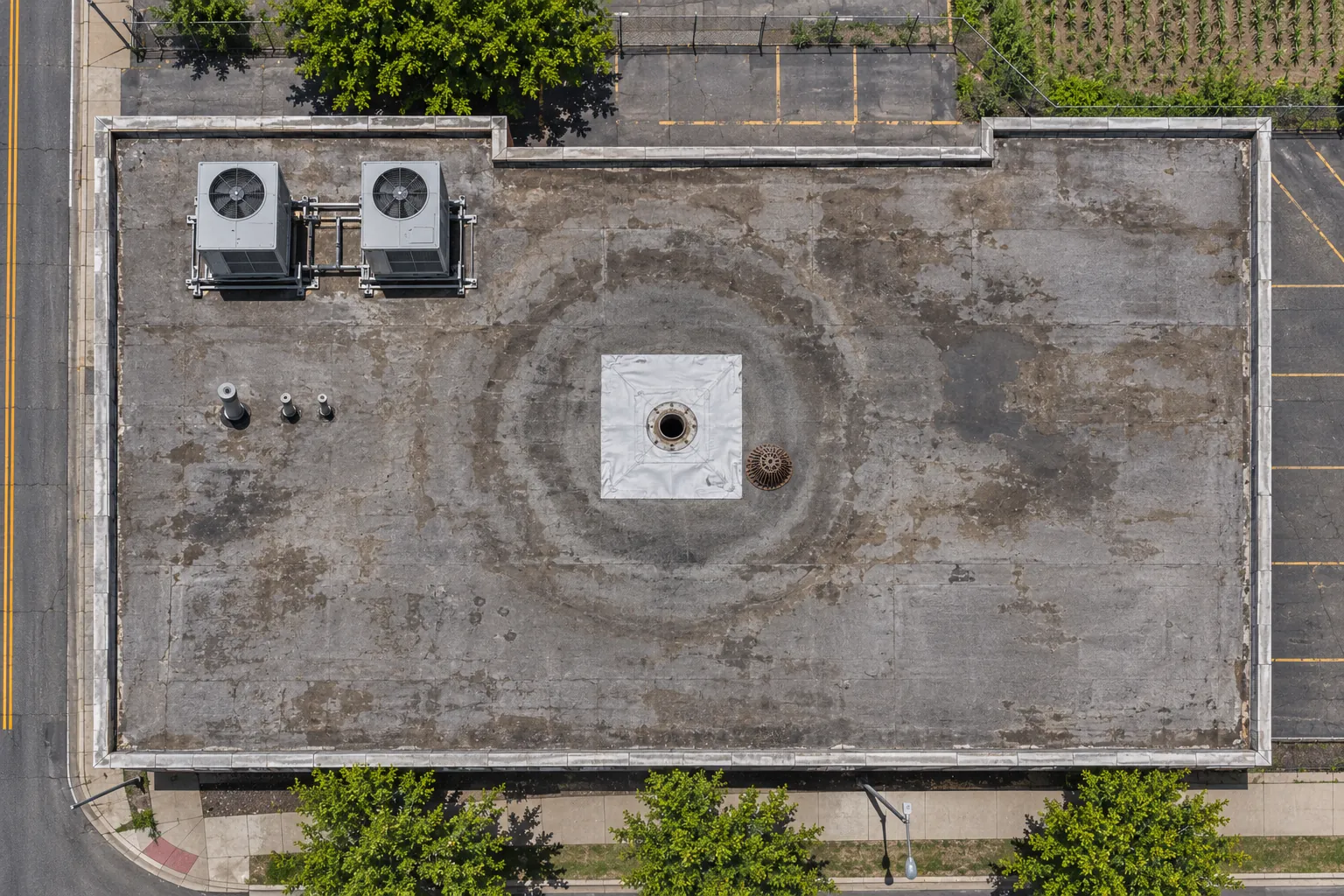
Flat sections between plant equipment hold water where dust clogs the drains.
Typical Repairs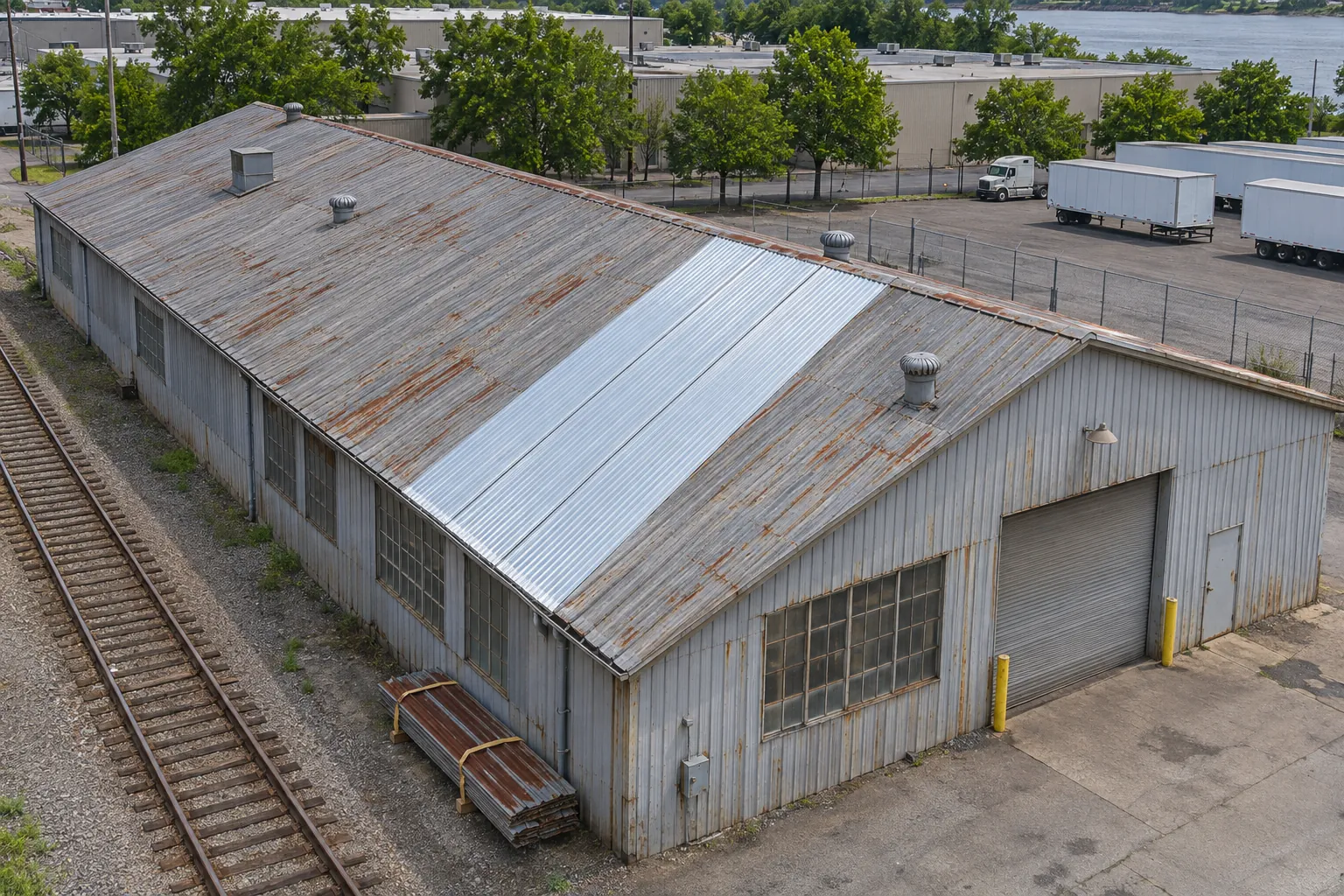
Metal process buildings and additions need fastener and lap work alongside the equipment repairs.
Typical Repairs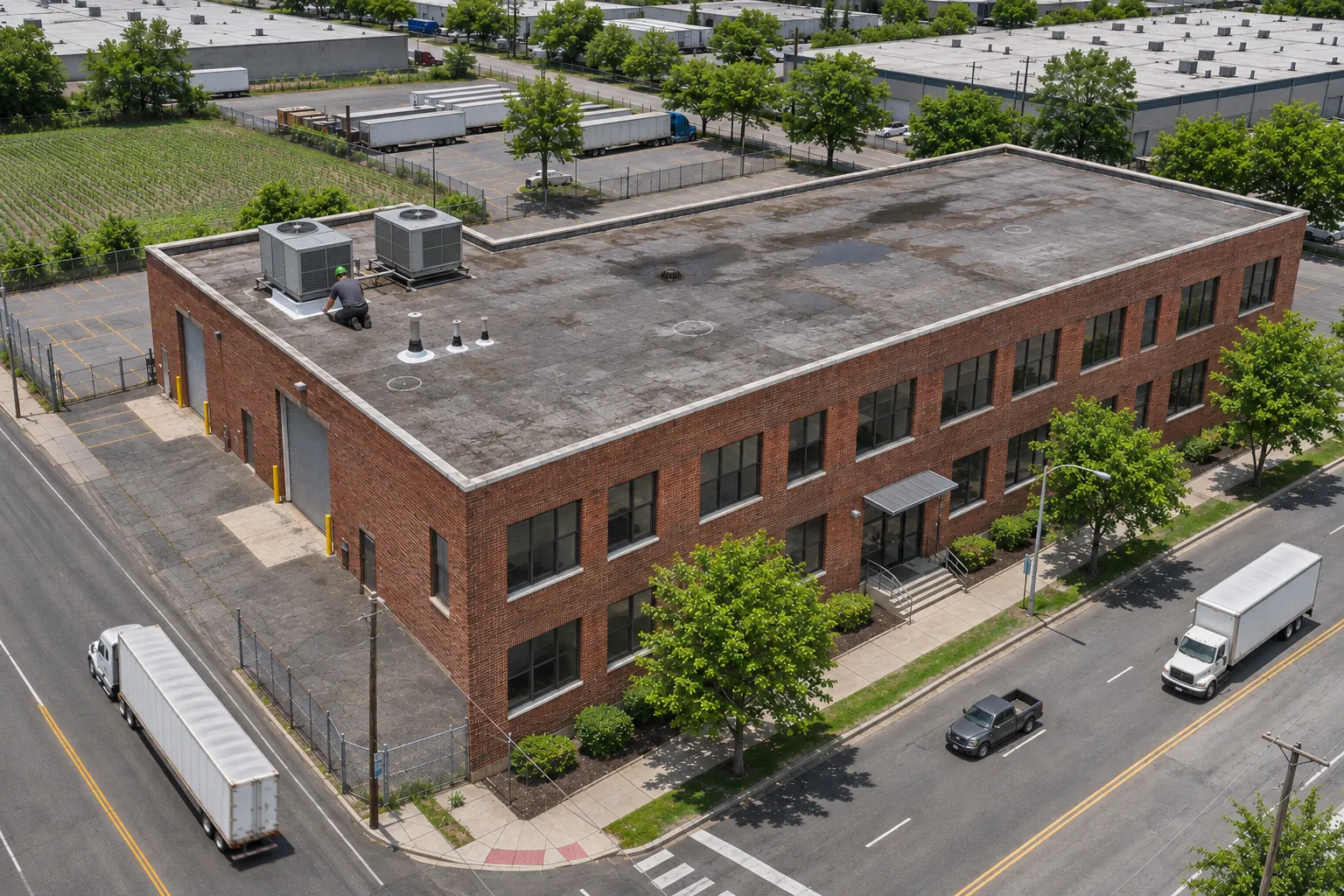
Water dripping on a production line gets traced back to its opening before any repair is planned.
Typical RepairsAnswers about working above production and keeping repairs holding.
Interior protection and a repair sequence that fits the operation come first. We find the entry path, the area that has to be opened, and any equipment that needs isolating. Dust and water exposure can call for a temporary work boundary even when the defect itself is small.
Residue and vibration both work against the repair. We inspect contaminated roofing, loose connections, and the shape of the flashing before picking materials. The fan may need its service technician too, so an unresolved equipment problem stops stressing the new flashing.
They do, because nearby roofing, drainage, and equipment use keep affecting them. We look for damaged patch edges, blocked outlets, and new wear on service paths. Notes after storms or maintenance visits help separate a new defect from a repair that needs more attention.
Defect locations, possible moisture spread, and connections needing a closer look. We tie those findings to the production areas below and note access limits around equipment. Photos and a roof sketch make the repair boundary clearer than a description built from the drip inside.
Send the plant address and what sits under the leak. We will plan the repair around your production schedule.