Leak Repair Fits When
- Stains appear after rain with no obvious opening above
- Drips show up only in heavy or wind-driven storms
- Water lands far from any roof penetration
- A leak returned after an earlier patch
- Water appears near a rooftop unit or curb

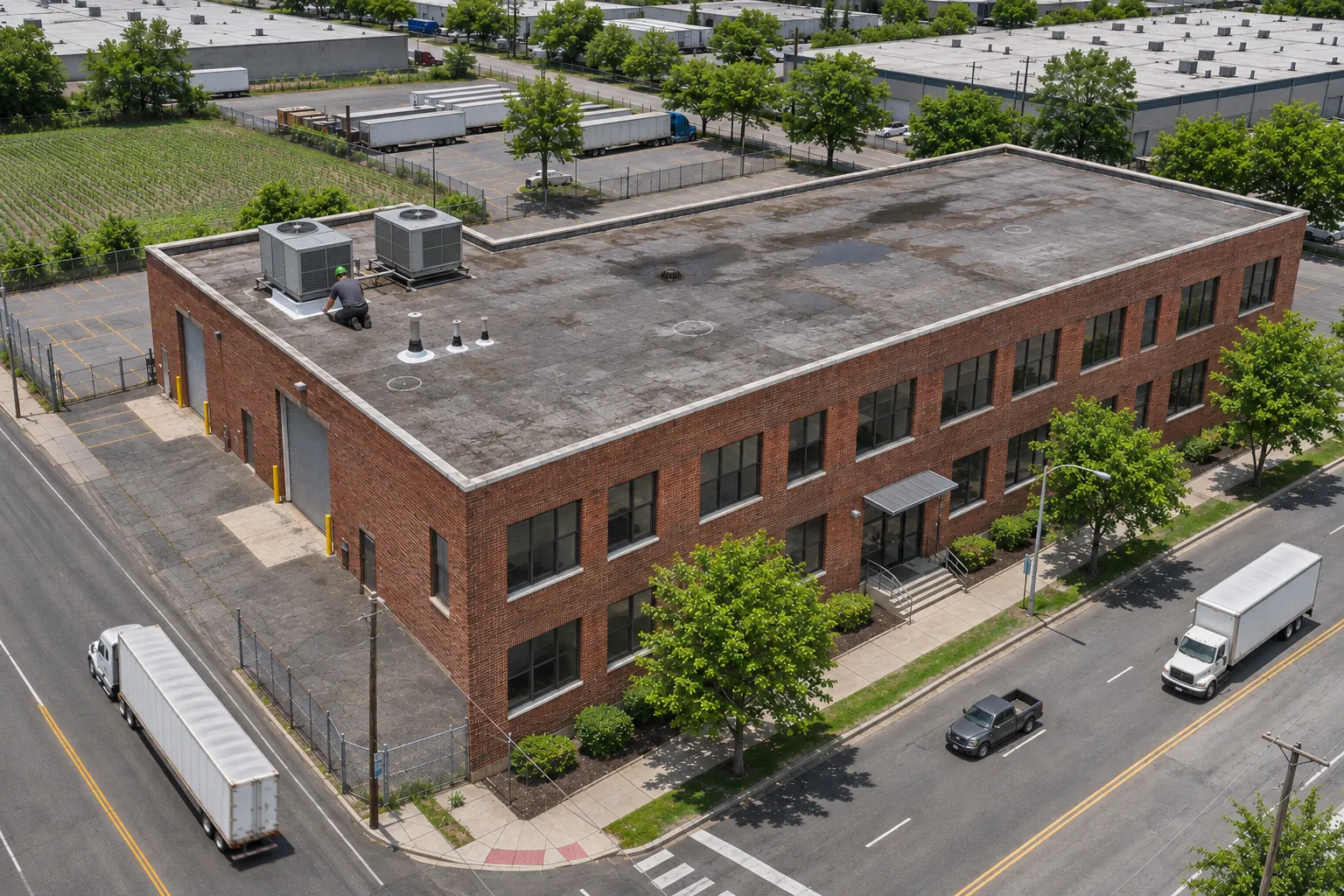
Our Philadelphia commercial roof leak repair work traces water from the stain inside back to the seam, curb, drain, or unit where it enters.
Philadelphia commercial roof leak repair fits when water reaches the inside and the source is still unclear. The second list covers broader problems.
Leaks rarely drop straight below their source. These signs help narrow down where the water starts.
Water that appears only in downpours or wind-driven rain points to a detail that sees water only when runoff rises, such as a parapet or a high seam.
Leaks often run along the deck or between roof layers before they drop. A stain in the middle of an aisle can start at a curb many feet away.
Wet spots under a unit can come from condensate lines or equipment faults as easily as from the curb flashing around it.
A leak that returns after a repair usually means the patch sat over the drip, while the real opening is somewhere upslope.
Moisture in brick near the roof can come from the wall itself or from indoor humidity. Comparing it with weather sorts that out.
Tracing comes first, and the repair follows what the trace finds.
We map stains inside against seams, curbs, and drains above, then narrow it down with probing, water tests, and small openings.
Curb flashing and service openings get checked against equipment run times, with the HVAC technician brought in when a unit adds water.
Base and counter-flashing at walls get rebuilt where water runs behind them in wind-driven rain.
Once the entry point is confirmed, that seam or lap gets patched with matching material past the opening.
Price depends on tracing time, the roof system, the number and size of damaged areas, wet insulation, flashing and drain work, and access.
Fixing the opening, instead of the drip, is what keeps the next storm outside.
Repairs placed over the drip leave the real entry point untouched.
Tracing finds the opening, so the repair goes where water actually enters.
Condensate and unit faults can wet the ceiling with no roof damage at all.
Matching leaks with run times separates equipment water from roof water.
Water travelling through roof layers soaks insulation along its path.
Cores along the traced path find wet board, which gets replaced with the repair.
Some details leak only when wind drives rain against them.
Water tests that copy storm conditions show the weak connection so it can be rebuilt.
Call and tell us where it is and when it started. Notes on the weather that day help us trace it.
Call UsLeak work runs from inside the building to the roof and back.
Each stain, drip, and wet tile gets marked on a floor sketch with the date and weather, so the roof walk starts from evidence.
Seams, curbs, drains, and flashing above and upslope of the marks get probed, water-tested, or opened in small spots.
The suspected opening is tested on its own until water shows up inside where the stain sits, which confirms the source.
That seam, curb, or flashing gets repaired with matching material, and wet insulation along the path is replaced.
Photos and notes go into your roof file, so a future leak can be checked against what was already repaired.
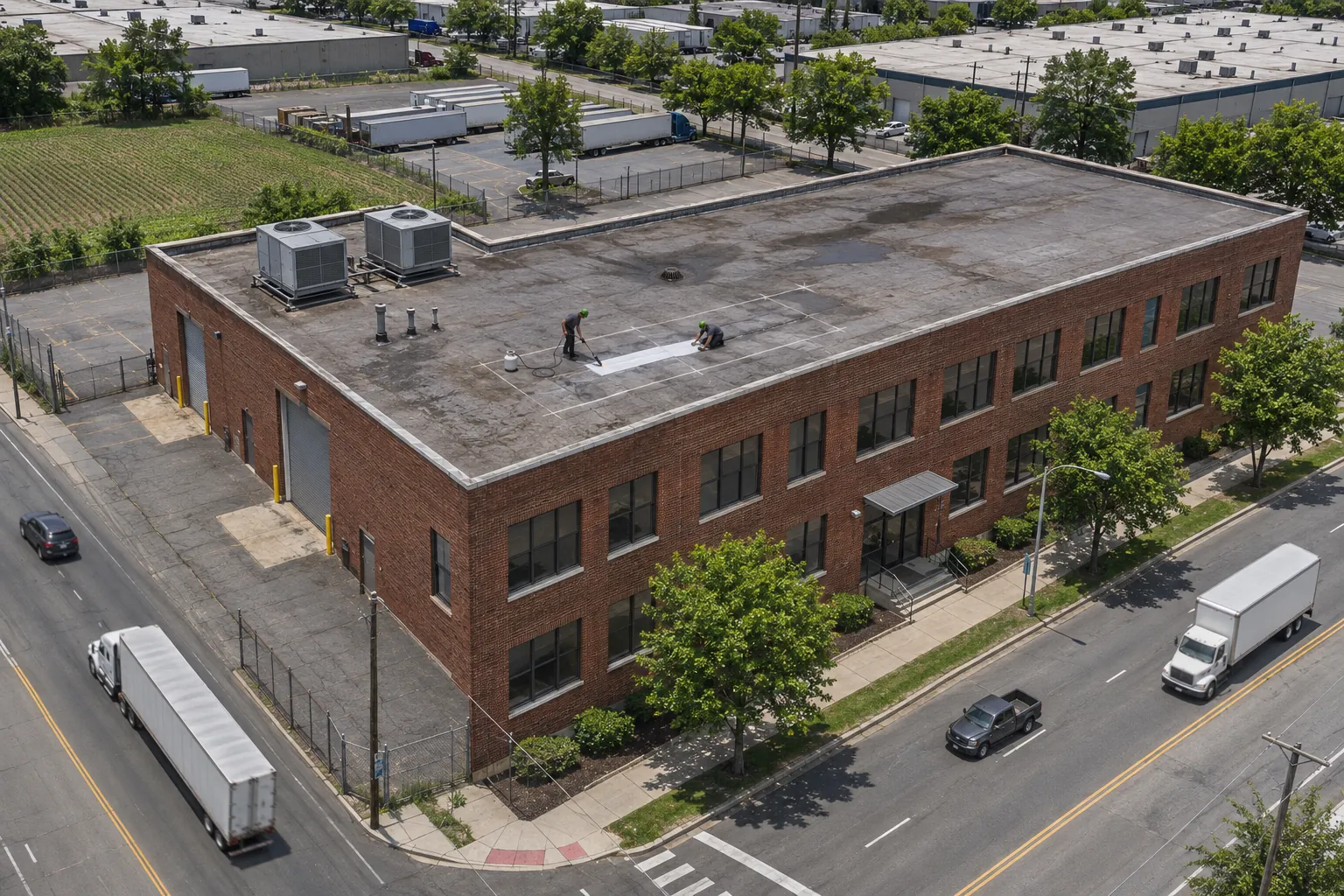
A traced leak often leads to a drain, a metal lap, or plant equipment.
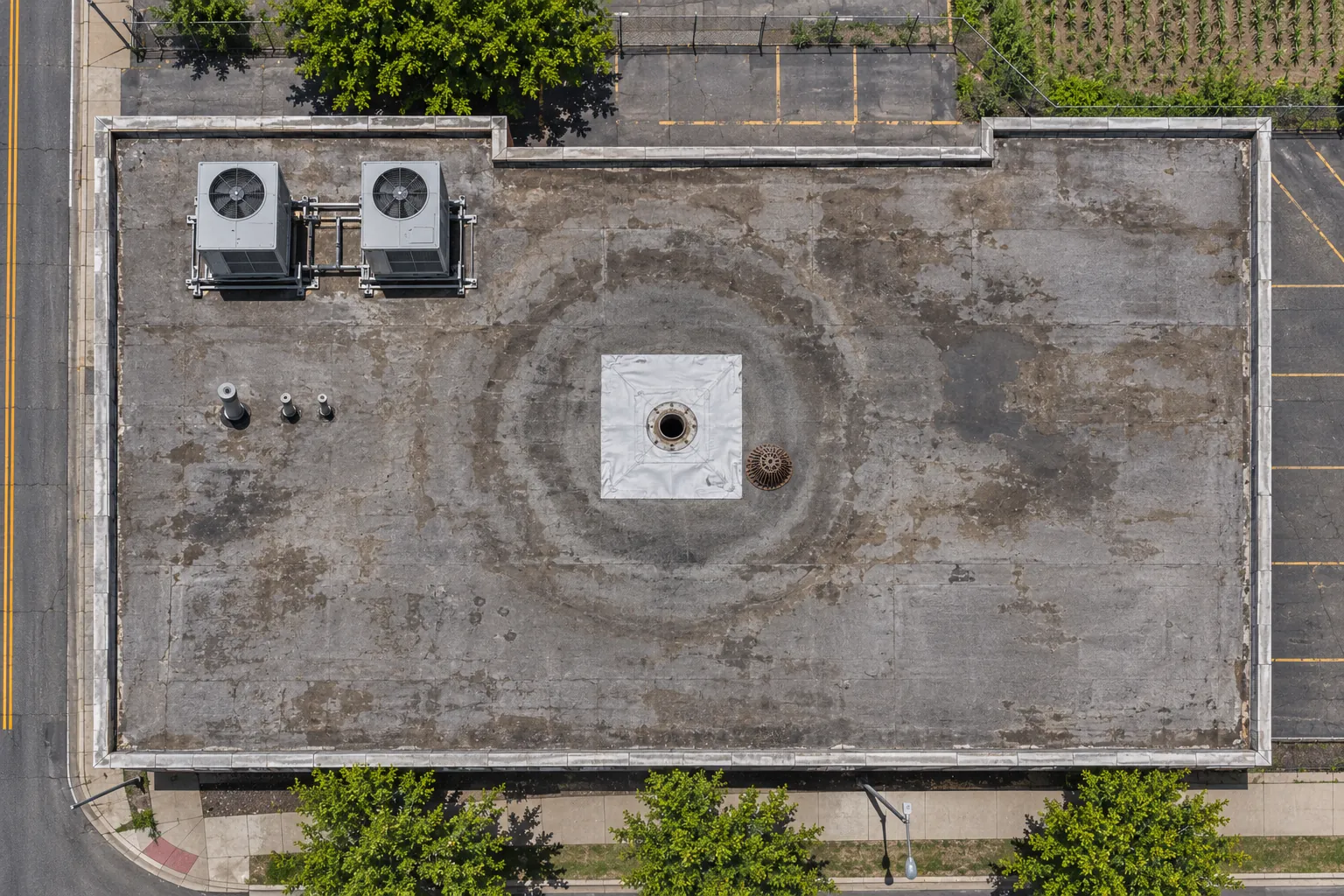
Many traced leaks end at a drain bowl, a low spot, or an open lap on a membrane roof.
Typical Repairs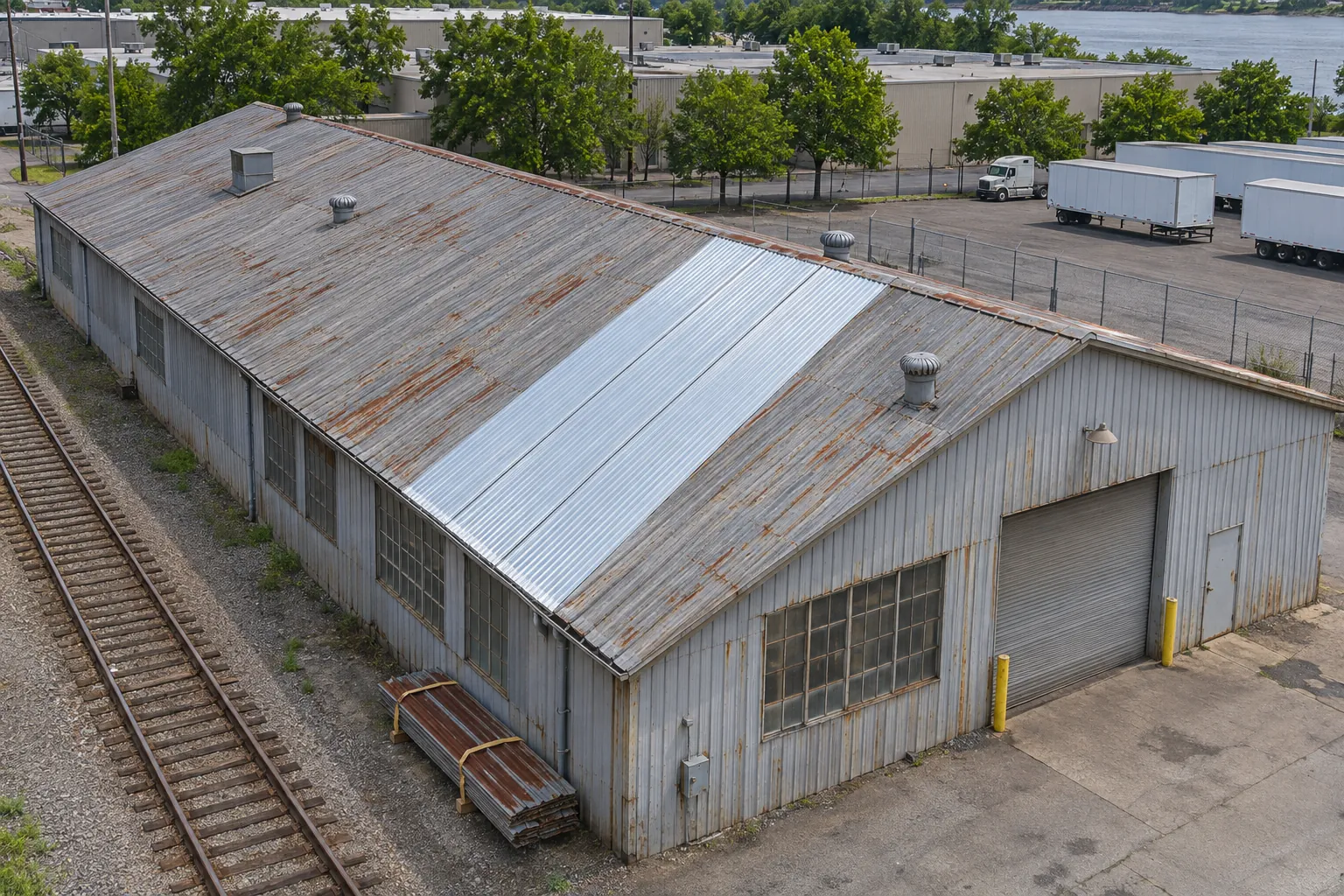
Leaks traced to steel roofs usually stop at a backed-out screw, an open side lap, or a rusted panel end.
Typical Repairs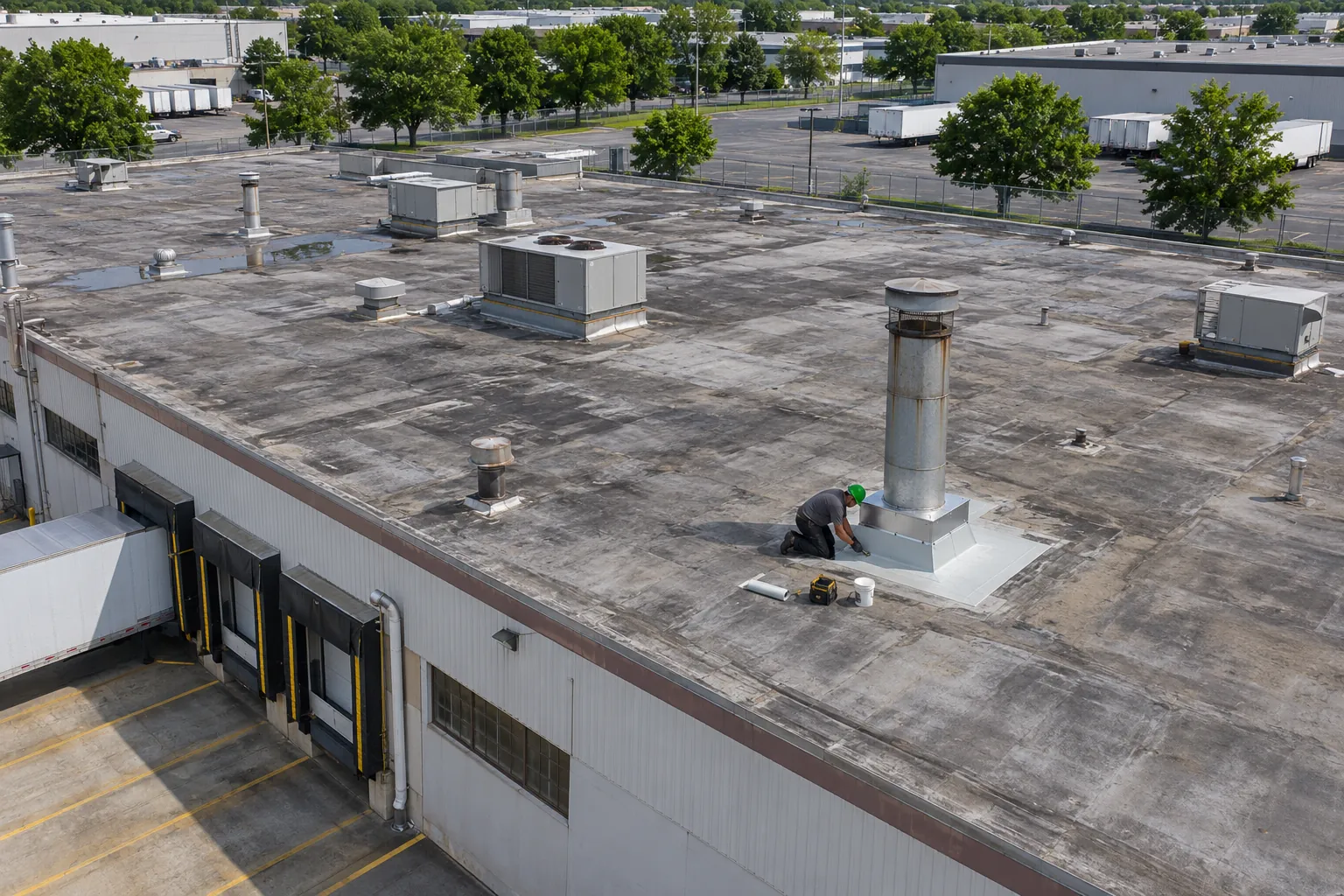
Traces on plant roofs often lead to a stack, a pipe support, or a fan curb above production.
Typical RepairsAnswers about storm leaks, tracing, and what drives the price.
A drip during storms still means water is getting into the building, so it deserves a look. We compare rain direction and intensity with the drains, parapets, and openings nearby. A roof that stays dry between storms can have a weak spot that only rising runoff or wind-driven rain reaches.
It travels along the deck or between roof layers before it drops. We map the inside evidence against the seams, curbs, and drainage above, then narrow it down with testing or small openings. Patching right above the drip often leaves the real entry point untouched.
Yes. Equipment faults and condensate drainage can wet the ceiling even with healthy roofing around the unit. We compare the leak with when the equipment runs and when it rains, then check the curb flashing and service openings.
Tracing can turn up damage past the visible opening, which widens the repair. The price is set after the inspection covers the roof system, the size and number of damaged areas, core cuts, flashing, drains, and access.
Move or cover stock and equipment under the drip, put a bucket under steady drips, and mark the stain edges with the date. Those notes on timing and weather make the trace faster once we are on the roof.
Send the address and when the leak shows up. We will trace it to the opening and price the repair.