A Repair Fits When
- The leak traces to one drain, seam, or curb
- Cores around the leak come out dry
- The membrane still bends without cracking
- Ponding sits in one spot with a clear cause
- Earlier patches are few and holding

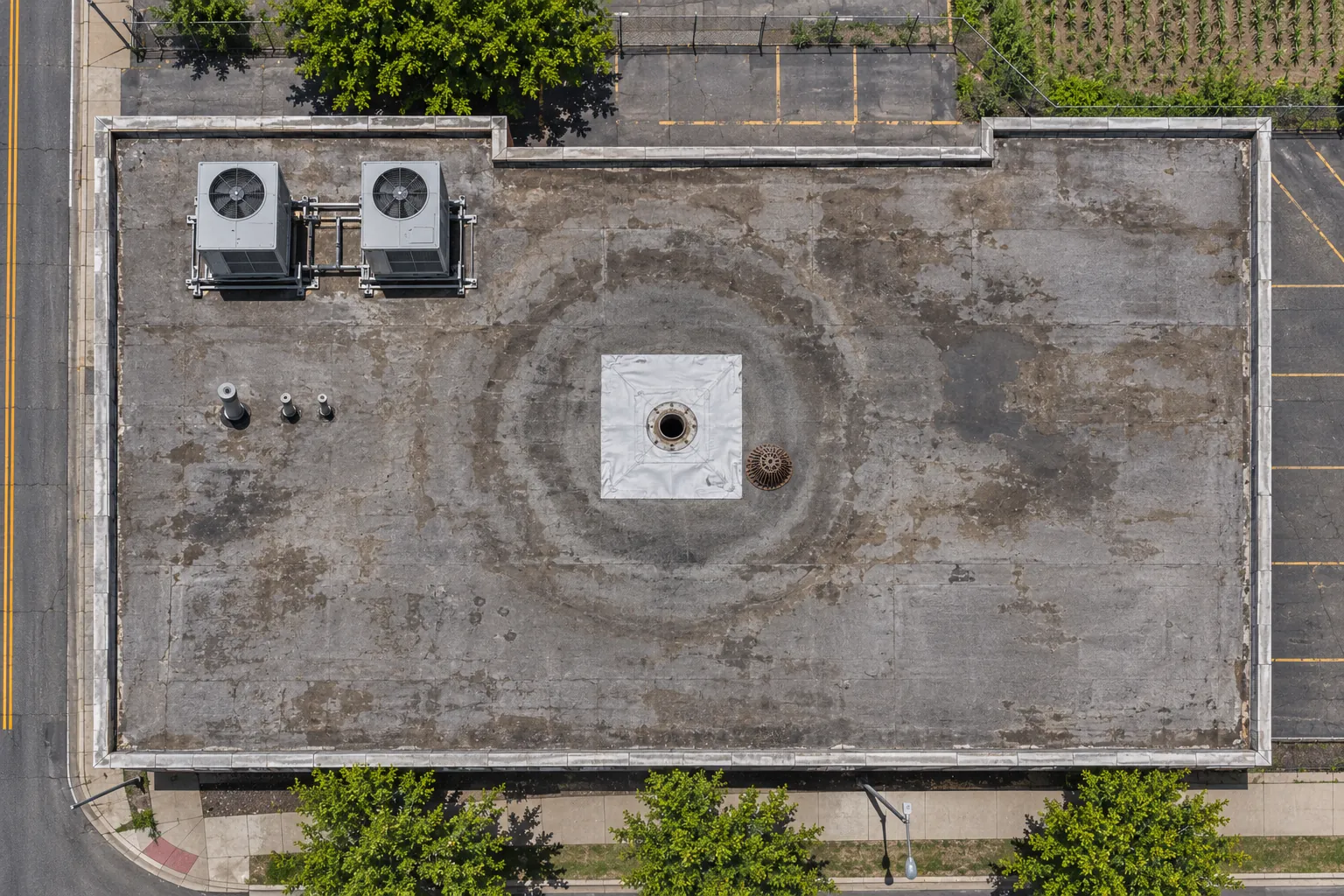
Our Philadelphia flat roof repair work fixes leaking drains, open seams, and wet low spots on commercial membrane and built-up roofs.
Philadelphia flat roof repair fits most leaks on low-slope roofs. The list on the right shows when a larger section needs attention.
Low-slope roofs give warnings before water gets inside. These are the ones we see most on commercial buildings.
Dark rings and dirt lines on the membrane mark where water sat for days. They show where the slope, drain, or insulation has failed and where seams will open next.
Water dripping near the drain pipe inside usually comes from the clamping ring, the bowl, or the pipe joint below the roof. Each needs a different repair.
Loose laps at a wall, curb, or roof edge let wind-driven rain under the membrane. Probing the seam shows how far the opening runs.
Raised bubbles in built-up or modified roofs hold trapped moisture or air. Small ones get watched; split or soft ones get cut out and patched.
A roof that gives when you walk on it usually has wet insulation underneath. Core cuts confirm it before any patch goes on top.
Each method matches one kind of failure on a low-slope roof.
We clear the bowl, replace the flashing sheet, reset the clamping ring, and check the pipe joint below before closing it up.
Low spots get traced to their cause: a blocked outlet, crushed insulation, or deck movement. Tapered insulation or a relocated drain fixes the cause.
Open laps are cleaned to bare membrane and covered with a matching patch that runs well past the opening on all sides.
A small split in dry roofing takes a patch. Wet board under a wider area means that section gets cut out and rebuilt to solid edges.
Damaged blisters are cut open, dried, and patched. Splits from movement get reinforced so the same line does not reopen.
Each repair targets the cause, so the next heavy rain finds a roof that drains.
Water slips past an old clamping ring and runs down the outside of the drain pipe.
New flashing and a reset clamping ring close the joint, and the pipe below is checked for its own leak.
Puddles that last for days wear seams and add weight over the same patch of deck.
The outlet, slope, and insulation get fixed so water reaches the drain instead of sitting on the membrane.
Insulation under a slow leak stays soaked and keeps feeding moisture back into the roof.
Wet sections are cut out and replaced, so the new membrane sits on dry, firm insulation.
Seams at walls and curbs lift first, since those edges move the most.
Matching patches are welded or adhered past the open area and tied into the base flashing.
Call and tell us where the water is showing up. Drain leaks get looked at from the roof and from below.
Call UsA flat roof repair moves from the outlet and the low spots outward.
Drains, scuppers, and ponding areas get checked before the field, since most flat roof leaks start where water collects.
Small core cuts show whether the insulation is dry or wet and how far the wet board reaches past the visible damage.
The repair edge is drawn where dry, solid roofing begins, then photographed and sketched for your written scope.
Wet board comes out, new insulation and membrane go in, and seams are welded or adhered into the sound roofing around them.
Running water through the repaired drain and probing every new seam confirm the repair before we leave the roof.
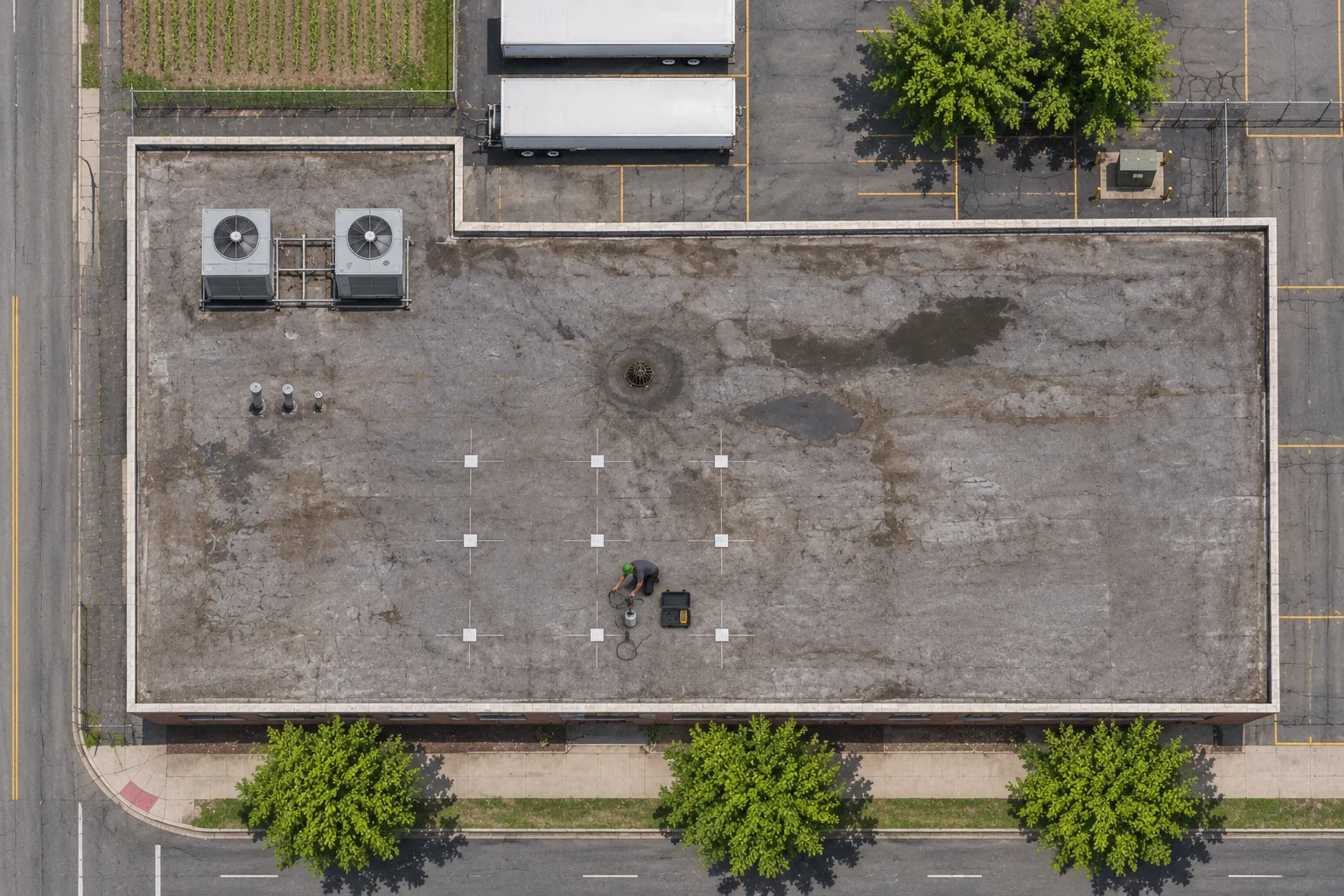
Flat roof leaks sometimes connect to metal sections, hidden entry points, or plant equipment.
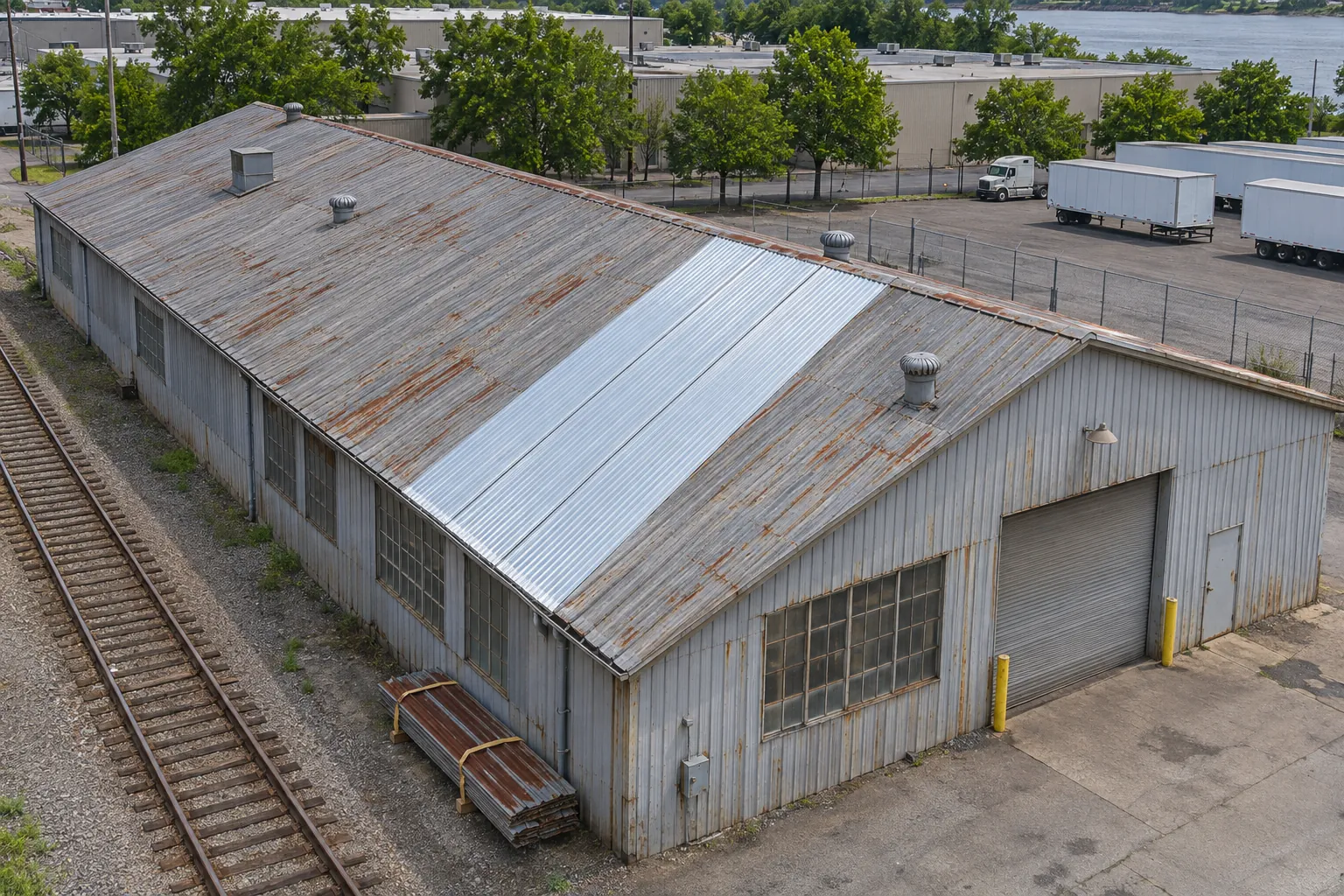
Steel additions and canopies on flat-roof buildings leak at their laps and screws, where a metal repair takes over.
Typical Repairs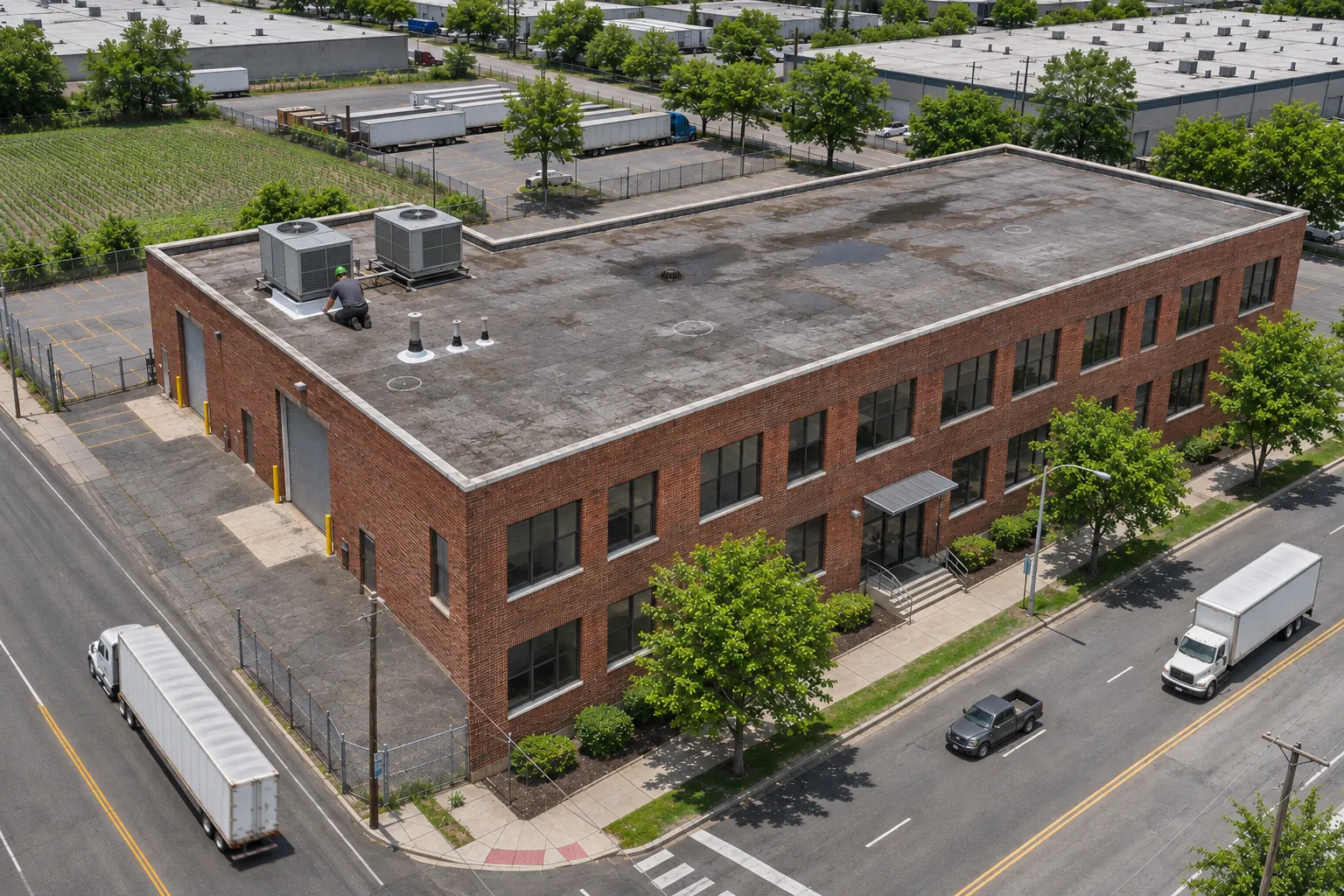
Some stains near a flat roof drain trace back to a curb or wall flashing upslope instead.
Typical Repairs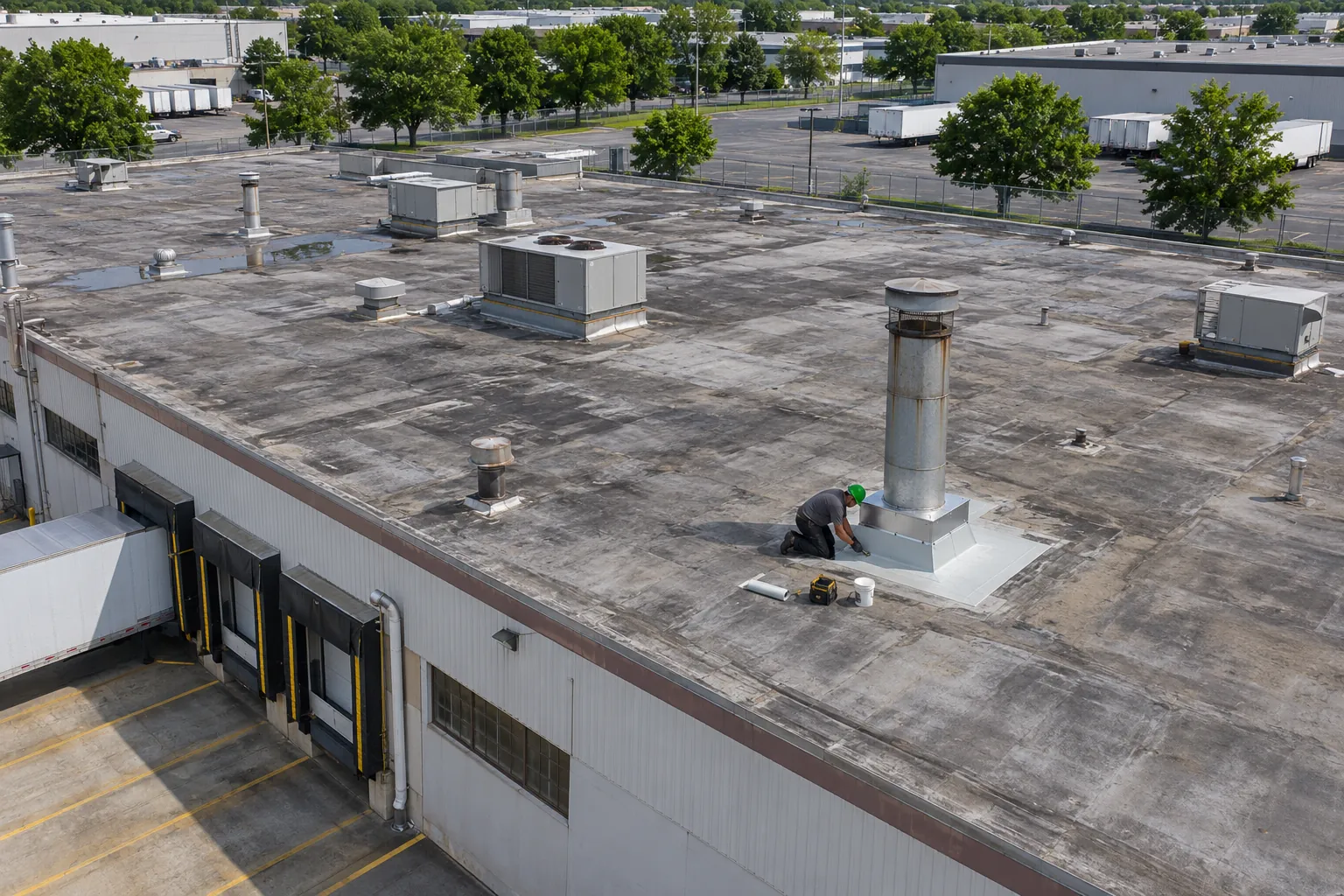
Plant buildings with flat roofs add fan curbs and stacks, where residue and vibration crack the flashing.
Typical RepairsStraight answers about drains, ponding, and patches on low-slope roofs.
Downpours push more water at restricted drains and weak details than light rain does. We check the outlets, low spots, and flashing before choosing where to patch. A stain beside a wall can start up at the coping, well above the wet ceiling.
A surface patch leaves the cause of the puddle in place. We check the drain height, debris, insulation slope, and any deck movement, then look at the wet area itself. The fix may combine drainage changes with replacing the damaged roofing.
Once wet insulation or worn membrane reaches beyond a small opening. A repair needs solid material at its edges to connect to. A small visible split can hide a larger wet area, while a single puncture in dry roofing takes a compatible patch.
At the membrane joint, the drain bowl, or the pipe under the roof. We check each part separately. If the pipe is leaking, the plumber and the roofer line up their work before anything is opened above occupied space.
Many flat roof repairs go ahead through the winter. Some adhesives and sealants need dry surfaces and milder temperatures, so a temporary seal can hold an active leak until conditions allow the permanent repair.
Send the address and a note about the drain, seam, or low spot. We will walk the roof and price the repair.