Repair Works When
- Leaks trace to loose screws or open laps
- Rust sits on the surface of solid steel
- Purlins and supports under the panel are firm
- Seams still engage along their length
- Damage is limited to a few panels
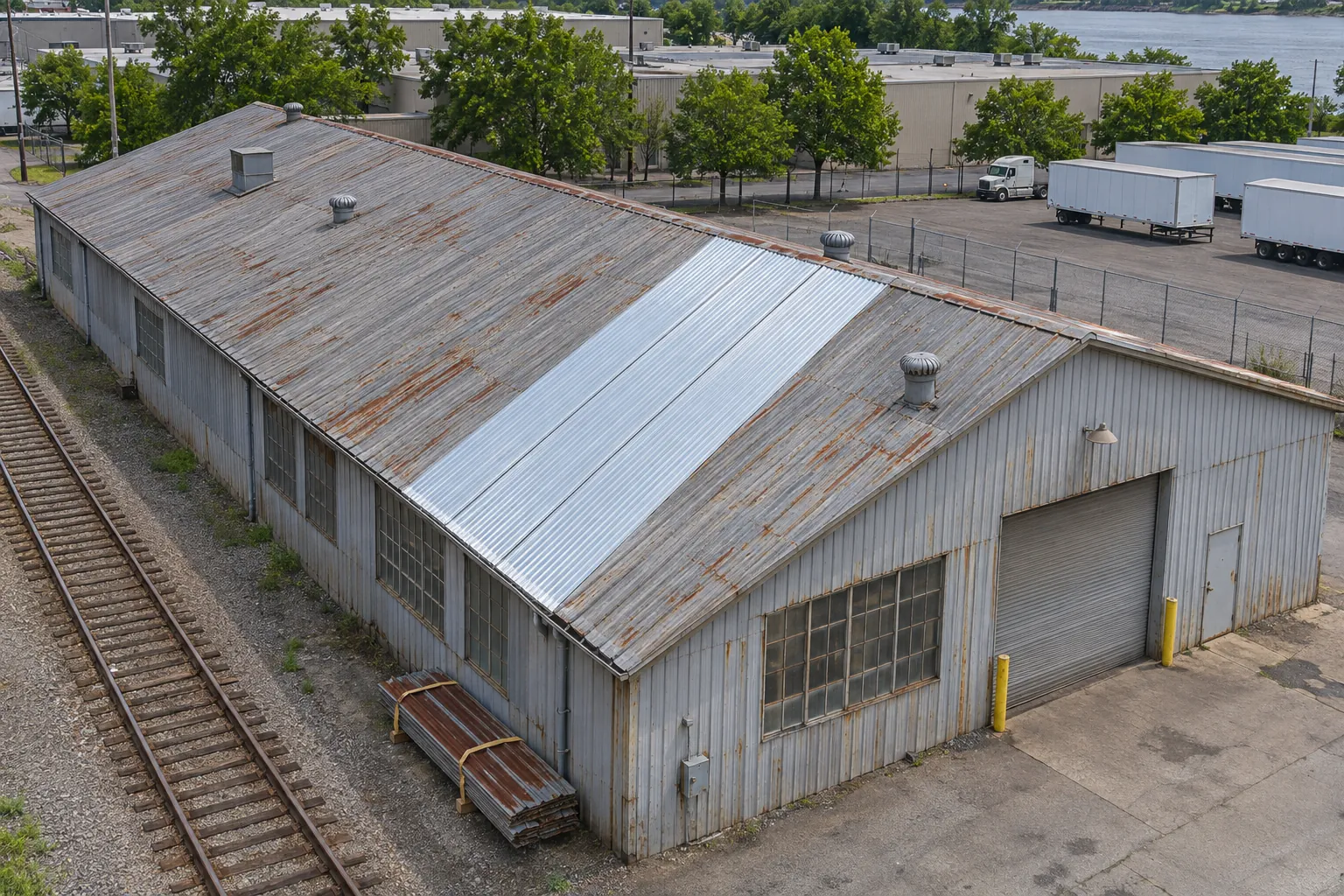
Our Philadelphia commercial metal roof repair work tightens fasteners, fixes enlarged holes, swaps rusted panels, and repairs seams on steel roofs.
Philadelphia commercial metal roof repair works when the steel and supports are still solid. The right column shows when panels need replacing.
Metal roofs leak at their connections first. These signs show up before the panels themselves fail.
Panels expand and contract every day, slowly loosening screws. A raised head with a cracked washer under it is an open path for rain.
Orange streaks along overlapping panels show water trapped between the sheets. Caught early, it gets cleaned and resealed.
Low panel ends near the eave hold water and debris until the steel rusts through. Sealant alone has nothing solid to grip there.
Standing seams that lose engagement, or laps that separate, let wind-driven rain inside. Old sealant often hides how far the gap runs.
Pipe boots, vents, and curb flashing on metal roofs crack as the panels move around them. Water then runs along the rib to the next opening.
Each connection on a metal roof gets the repair built for it.
An enlarged hole gets an oversized fastener or a repair plate that restores grip, after the metal around it and the support below are checked.
Panels rusted through are replaced with the same profile, fastened into solid supports, and sealed at both laps.
Seams are re-engaged or resealed with materials that flex with the panel, so the joint can keep moving as designed.
Rust that has not cut through the steel is cleaned to firm metal and sealed so it stops spreading along the lap.
Pipe boots and curbs get flashing shaped to the rib profile, so water sheds past them along the panel.
Each repair stops water at the connection that let it in.
Movement loosens screws and cracks washers until each one leaks.
Screws are replaced or upsized with new washers into solid support, so the panel is held tight again.
Water trapped between sheets rusts both panels from inside the lap.
Laps are opened, cleaned, sealed, and refastened; panels too thin to hold are replaced.
Seams lose engagement and old sealant cracks as the roof moves.
Flexible repairs close the seam while leaving the movement the panel system needs.
Steel tears at fastener rows when panels lift in wind.
Torn panels are replaced and fastened into firm supports along the full edge.
Call and describe where the drips line up inside. Rows of drips often follow a fastener line or a lap.
Call UsMetal roof work moves from the connections to the panels themselves.
Screws, washers, panel laps, and penetration flashing get checked first, since those connections leak long before the panels do.
Rusted areas get probed for thickness, and supports under suspect panels get checked so new fasteners have something solid to grab.
Each panel gets marked for resealing, refastening, or replacement on a sketch with photos, so the scope is easy to follow.
Fasteners are upsized, laps cleaned and sealed, and failed panels swapped for matching profiles fastened into firm supports.
Repaired laps, seams, and flashing get checked by hand and photographed for your file before the job is closed.
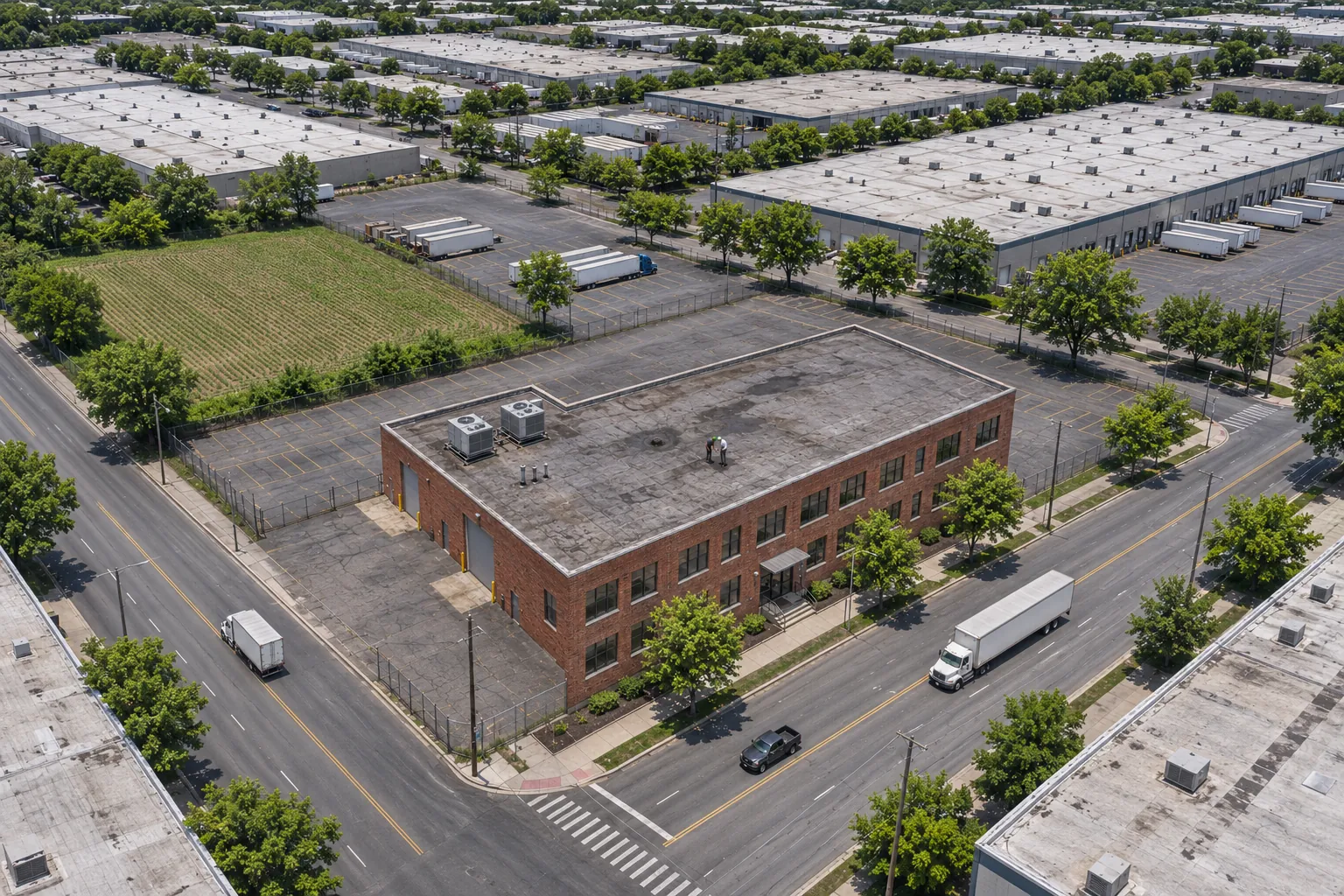
Metal buildings often have flat sections, hidden leaks, or plant equipment too.
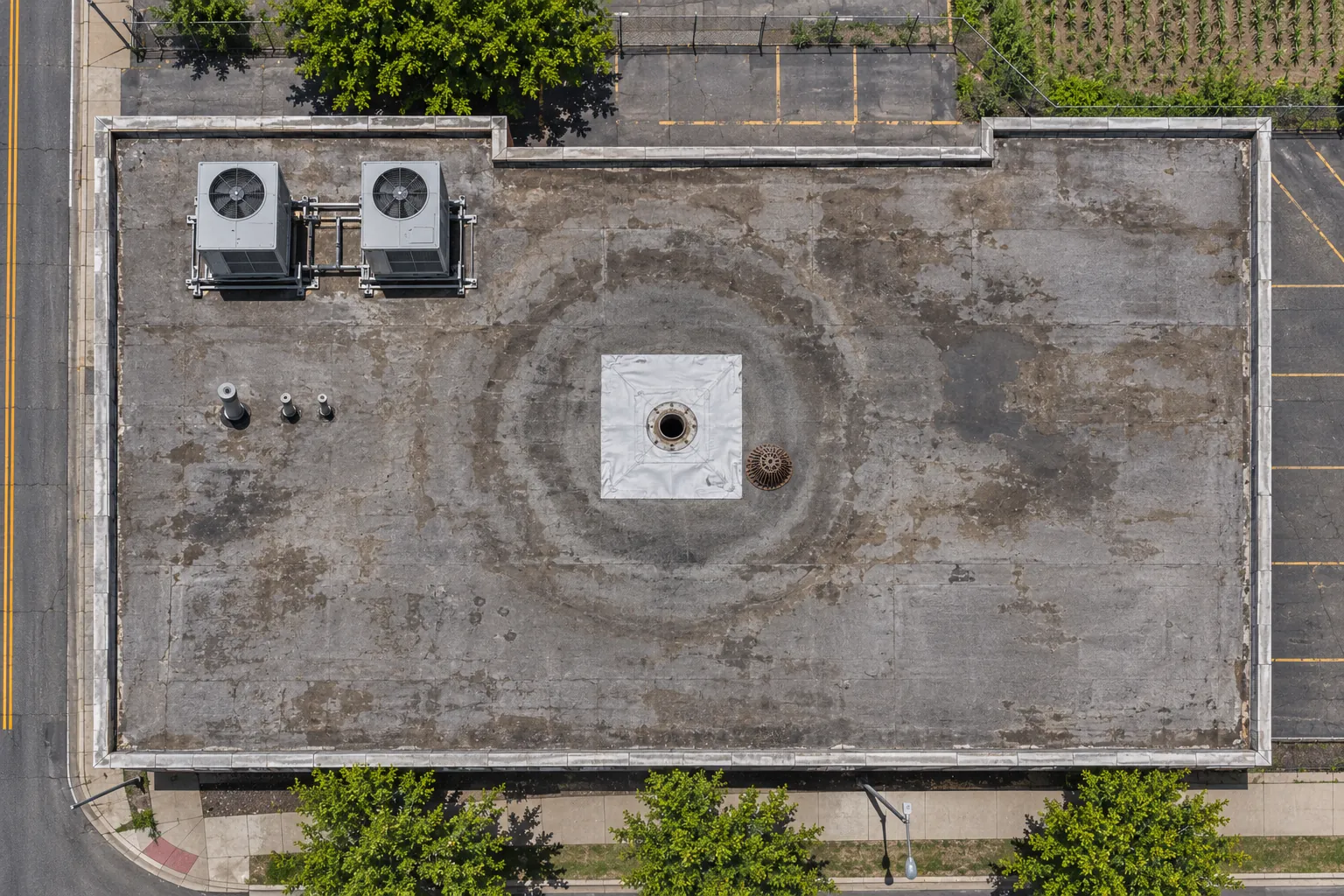
Metal buildings with a low-slope office wing or flat addition often leak where the two roofs meet.
Typical Repairs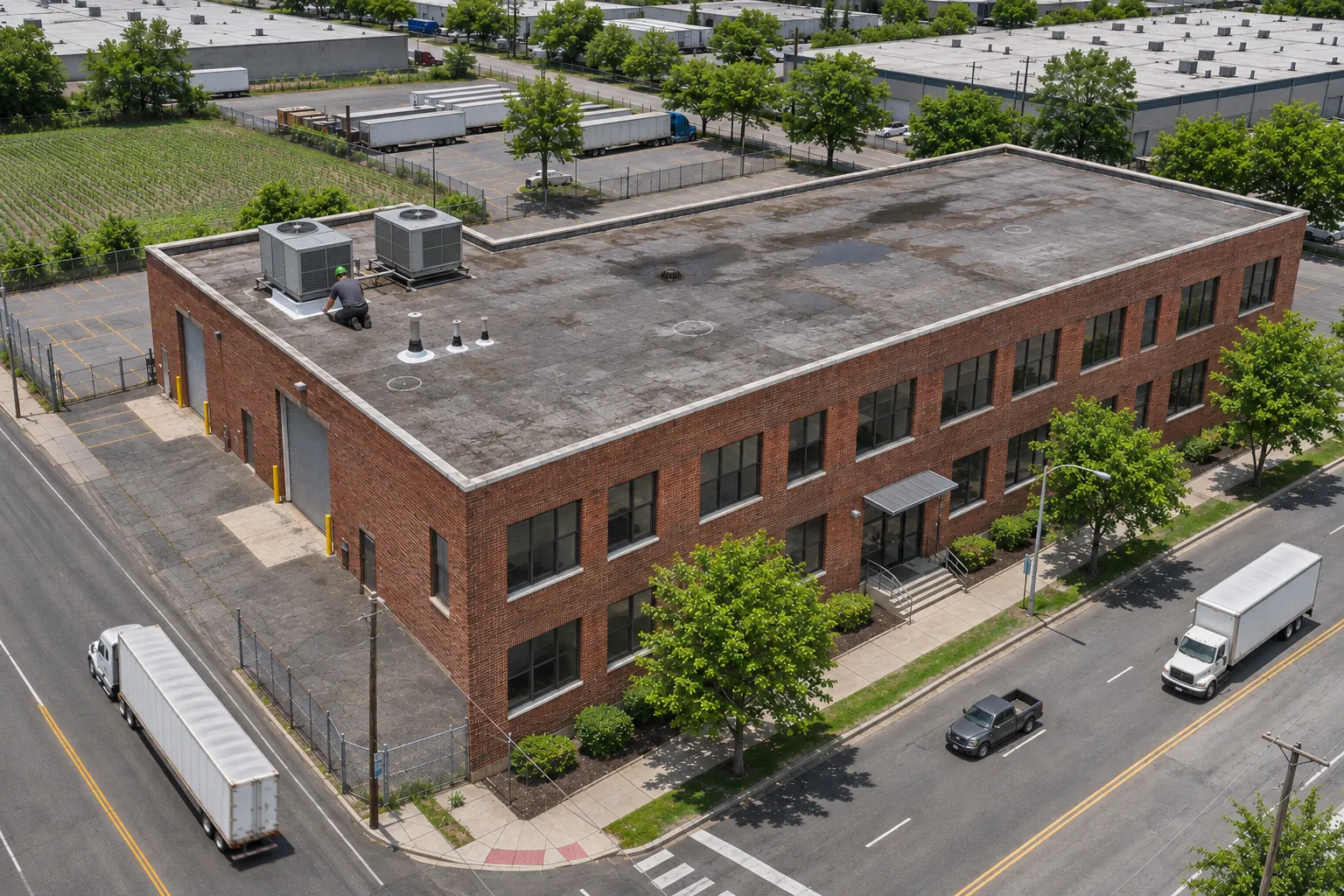
Drips lined up under a panel lap can come from a curb farther up the slope, so tracing comes first.
Typical Repairs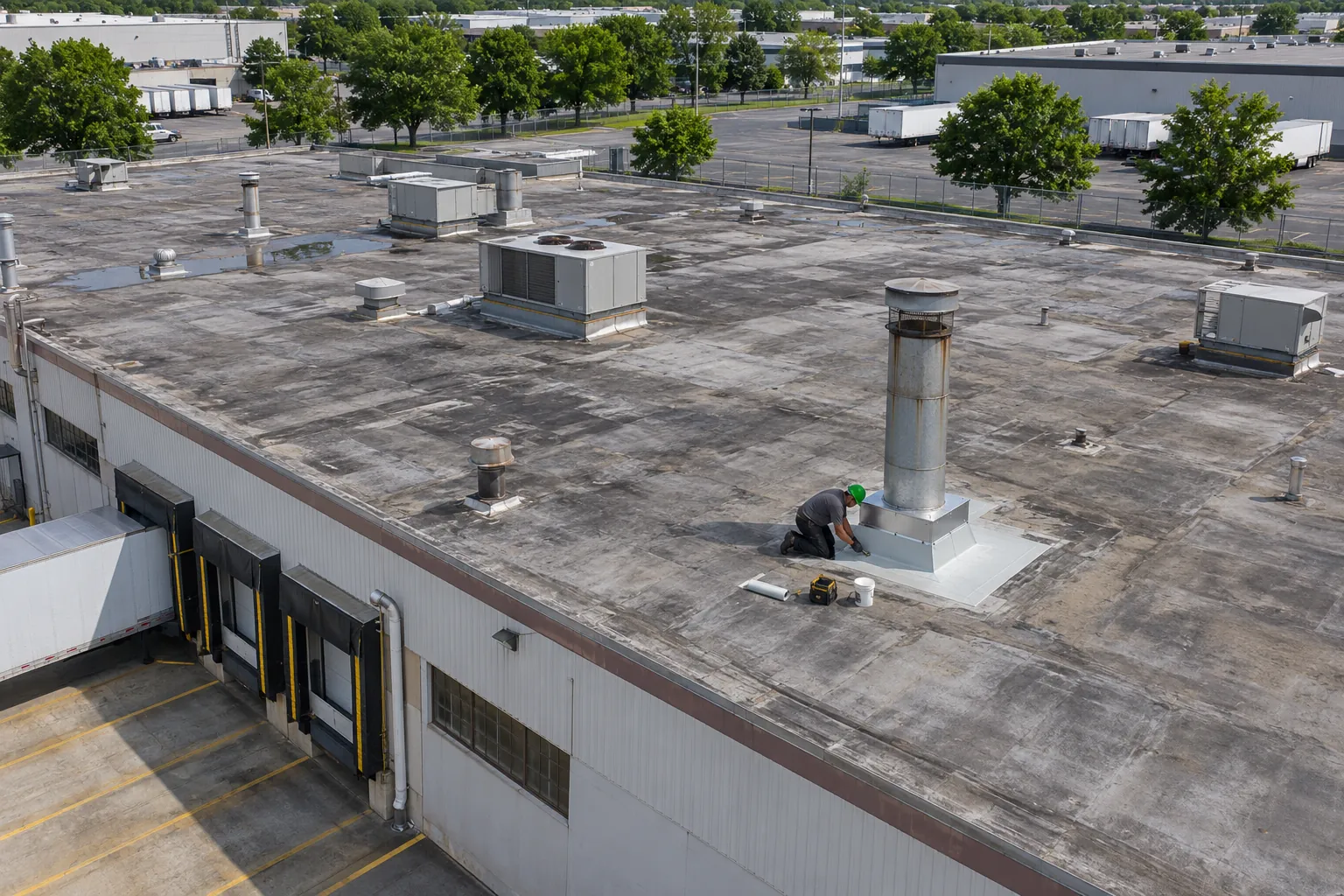
Steel plant roofs carry exhaust fans whose curbs crack as the panels and the fan both move.
Typical RepairsAnswers about screws, rust, and seams on steel roofs.
Exposed screws, panel laps, and flashing at penetrations top the list. Failed washers, screws that lost their grip, opened joints, and rust under old sealant all show up. Several bad connections can feed the same wet spot inside, so each one gets traced.
The repair has to restore grip and a weather seal together. We check the metal around the hole and the support under it before choosing a larger fastener or a repair plate. Sealant over a screw that spins in its hole leaves the movement in place.
Panels with surface rust on solid steel get cleaned and sealed. Holes or heavy metal loss rule out a local fix. Replacement planning also covers the panels next door and the supports, especially where an old patch has hidden rust that kept spreading.
A seam repair has to allow the movement the panel system was built for. A rigid patch across a moving joint shifts the stress somewhere else or cracks open again, so we use materials that flex with the seam.
A check after a heavy, wet snow is a good idea. Ice at the eaves and snow sliding off the ribs can pull fasteners and bend panel ends. Any sagging or deflection is a structural question for an engineer before roof work starts.
Send the address and where the drips line up inside. We will check the panels and price the repair.